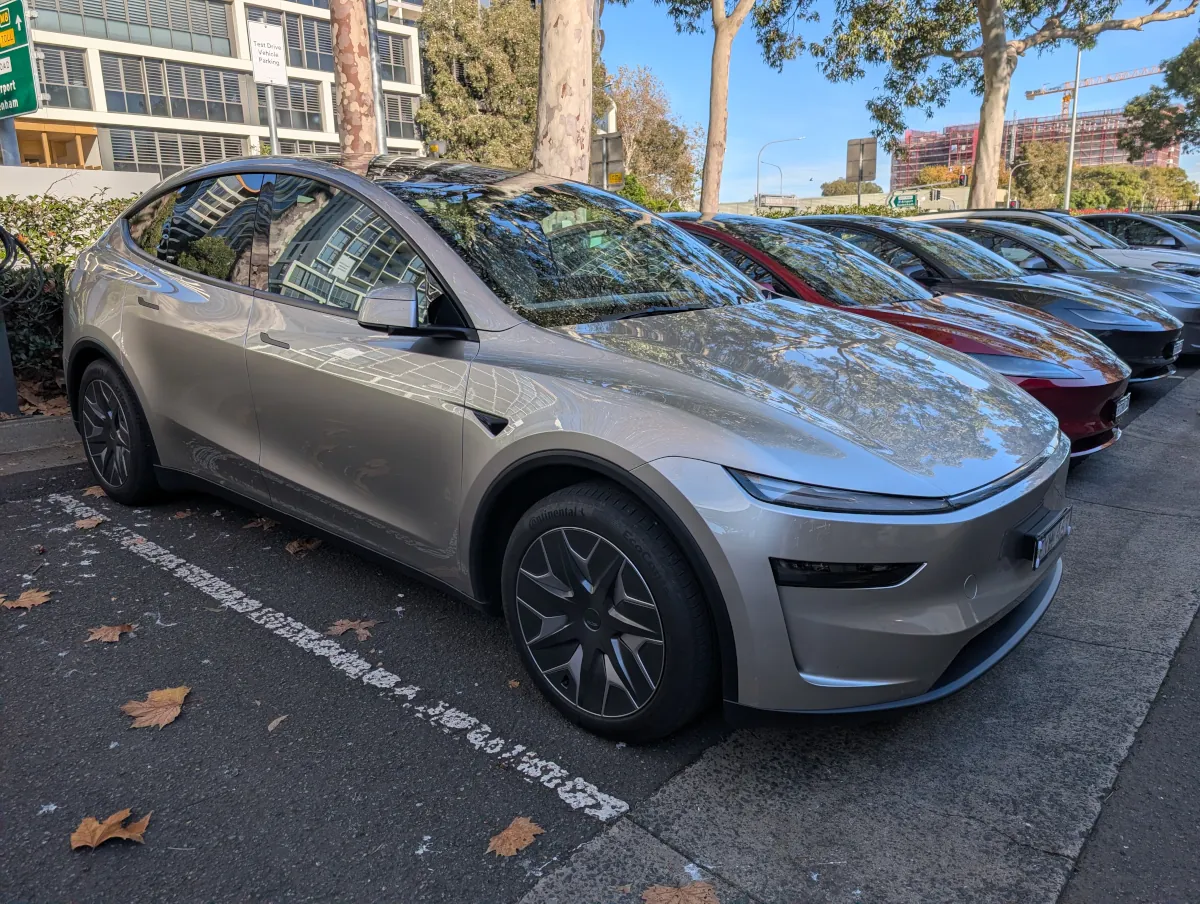
Tesla has not released a new vehicle model in Australia since the Model Y first arrived here 4 years ago, yet the Model Y electric SUV remains the top selling EV model in the country, and it was also the number 1 car overall in May, 2026.
Unlike traditional automakers that release updates with new model years, Tesla constantly iterates on their products to make improvements along the way and keep them competitive. The latest big update to the Model Y lineup is the 6-seater Y L, which starts from $74,900 plus on-road costs.
The main drawcard of the Model Y L is its versatile 6-seat layout, but there are some other features this car has which make it more compelling than one extra seat would indicate. The Y L is the first Tesla here that officially comes with vehicle to load (V2L), via a sleek charge port adapter that sells for just $145.
I would still prefer a built-in powerpoint located in the boot somewhere, but the Tesla adapter is significantly smaller and much cheaper than the adapters from some other car brands which retail for over $500. Unfortunately the V2L adapter was not in stock yet, so this will need to be tested later.
Another benefit that stood out as soon as I started driving the Model Y L was the improved ride and handling from its adaptive suspension and electronic damping system borrowed from the Model Y Performance.
This car drives and handles far better than you expect from a 6-seat vehicle that is nearly 5 m long, with a supremely comfortable and quiet ride when you feel like cruising, plus the hidden ability to hustle along twisty roads with confidence inspiring fun when you want it.
Plush and versatile interior
The 2-2-2 seating layout of the Model Y L gives it a lot of flexibility, allowing you to fit up to 6 adults or fold whichever seat(s) are necessary to fit long or large objects in the back. With this in mind, I think the versatility of the Y L makes it a great rideshare vehicle or even a last-mile delivery van if you fold all 4 rear seats down.
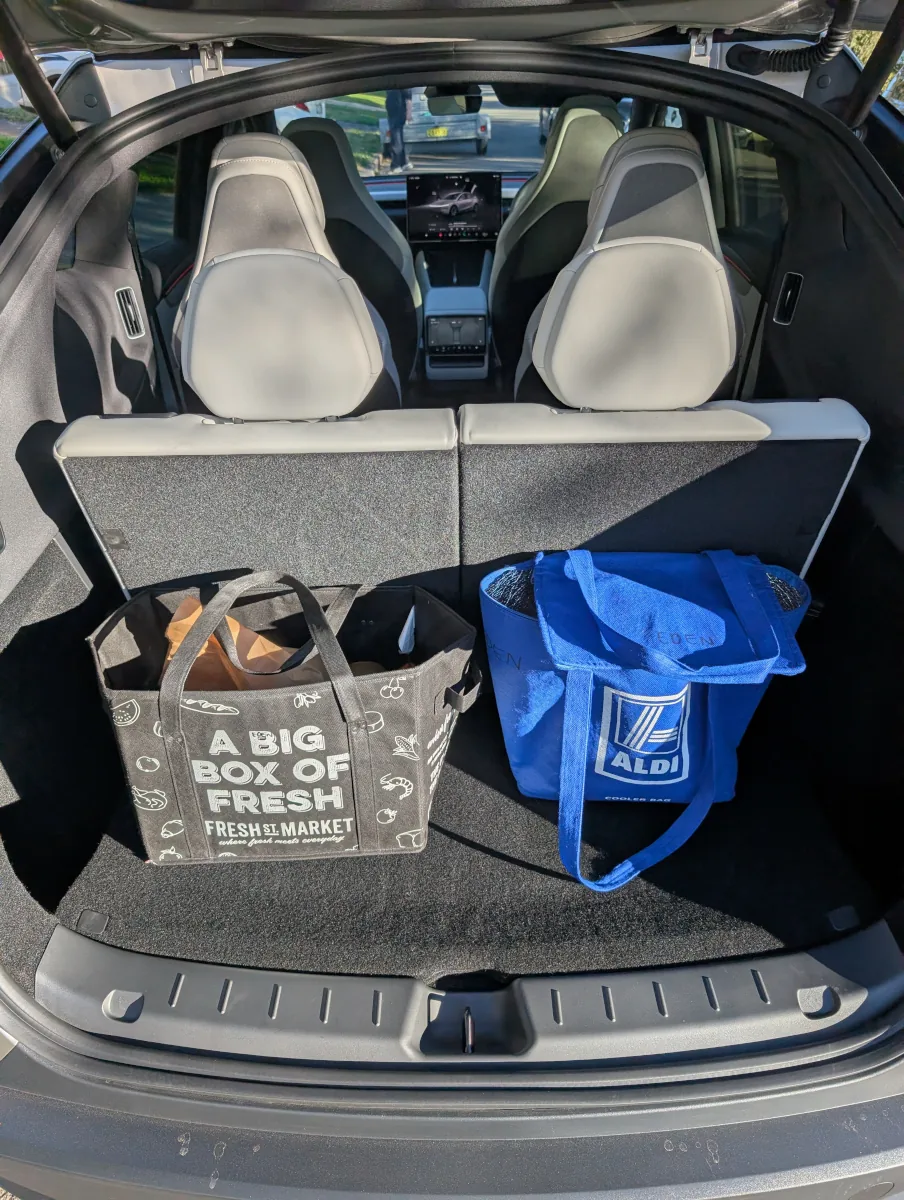
In terms of boot space, Tesla quotes 420 L with all 6 seats up, I’m pretty sure Elon had a say in coming up with that number. I found the boot was very usable in this configuration, with plenty of space for groceries. It helps that the Y L still has a very deep well under the false floor and 2 big recessed areas at the side which also hold a surprising amount of stuff.
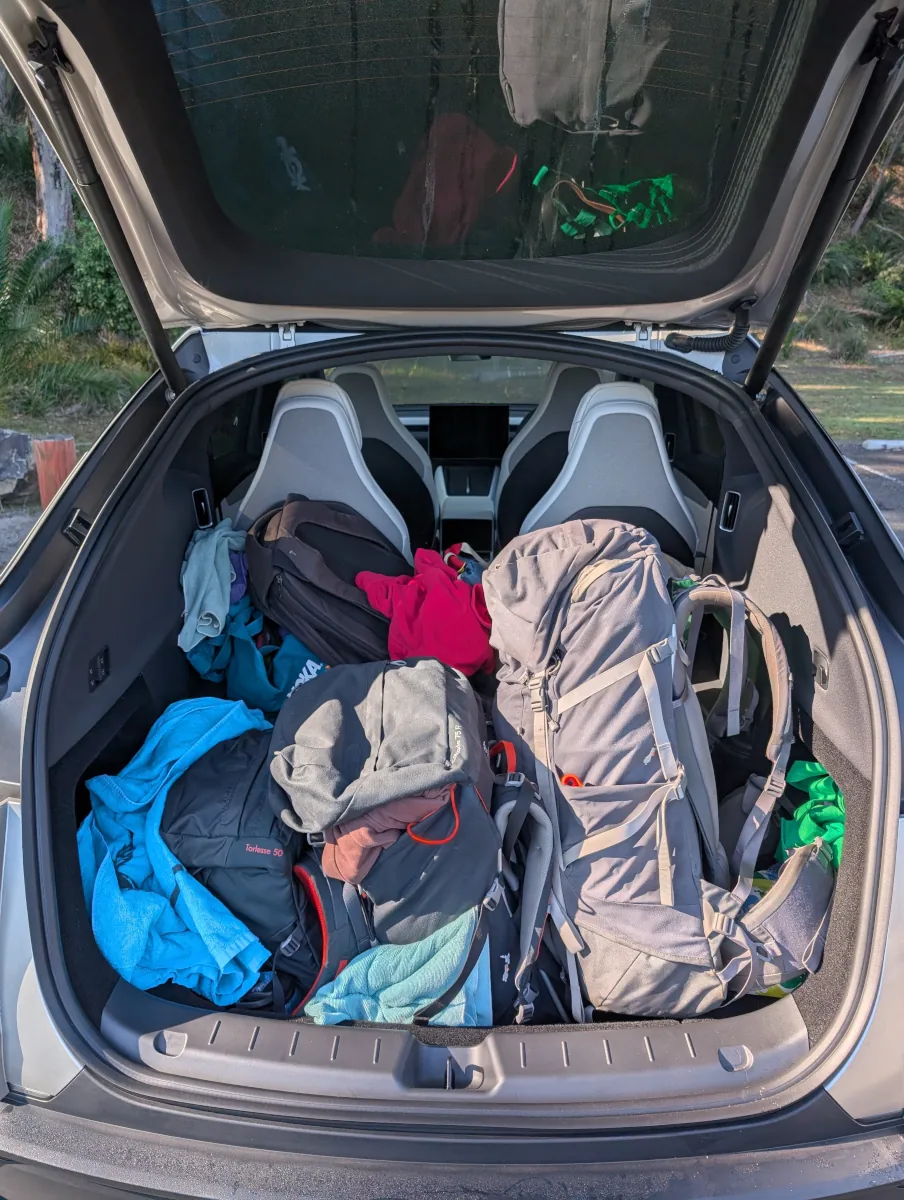
We took the Model Y L away over the June long weekend to do the Murramarang South Coast Walk in NSW, which gave us a great opportunity to experience what the car is like for road trips and camping. With the 3rd row folded the boot easily swallowed our overnight hiking bags and all the gear we needed for the weekend with plenty of room to spare.
I was looking forward to testing the V2L function with a portable induction cooktop on the first night while camped at Pretty Beach, but unfortunately the adapters have not arrived in the country despite being available to order on Tesla’s website.
When it comes to interior comfort and features, the Y L receives the usual minimalist Tesla cabin treatment, which may not be to everyone’s tastes. However, the Tesla infotainment system is still one of the best in my opinion and it is very responsive and easy to use. The Y L also comes with a 19-speaker goosebump level audio system that sounds amazing.
Similar to the refreshed Model 3 and Y, the Y L comes with a soft and squishy interior, complete with carpet lined door pockets. If you live in cold climates, you will be happy to hear that all 6 seats are heated. The 4 front seats are also ventilated, plus the driver gets a heated steering wheel.
Second row seats are very spacious and comfortable, with an electronically operated armrest that pops up from the side of each seat. Third row seats can recline electronically, while the 2nd row seats recline as well as slide backwards or forwards to make more legroom for the back row.
The only luxury feature I found missing was massaging seats, something that is becoming more common on new cars these days, even the sub-$50,000 Geely EX5 Inspire variant has them.
Many underlying improvements, visible or not
It has been many years since I test drove a Model S or X, but my recollection is they were not as nice or comfortable inside as the Y L. Over the course of a week I also discovered the Model Y L has a raft of improvements that Tesla has made over the years, especially when compared to my nearly 7 year old Model 3.
Many of these things are obvious, such as the interior comfort and sound system mentioned above. Some are not so obvious, including the use of magnets everywhere throughout the cabin which is both a cost reduction and simplification measure, that also leads to improved reliability and durability for owners.
For example, the Y L uses magnets in place of clips or other failure prone mechanisms for the sun visors, centre console lid, glovebox and for holding the false boot floor up against the back of the 3rd row seats which is genius. Let me know if you find magnets used in other places.
I have developed an increased appreciation of these things after watching countless teardown videos on Youtube channels like Munro Live and Ingineerix. I love the underlying engineering and simplicity that goes into solutions like this even though most people will never notice them.
There are also many things you can’t see, such as Tesla’s lithium-ion low-voltage battery that eliminates the need for 12 V battery swaps. I appreciate this having broken down in another brand of EV with a dead 12 V battery, and hearing Sam Parkinson’s stories about replacing the lead-acid battery in his Hyundai EV 3 or 4 times in as many years.
Range and efficiency is another area where Tesla never fails to astound me. The WLTP range for the Model Y L is 681 km, thanks to a larger 88 kWh battery pack squeezed into the 150 mm longer wheelbase over a 5-seat Model Y.
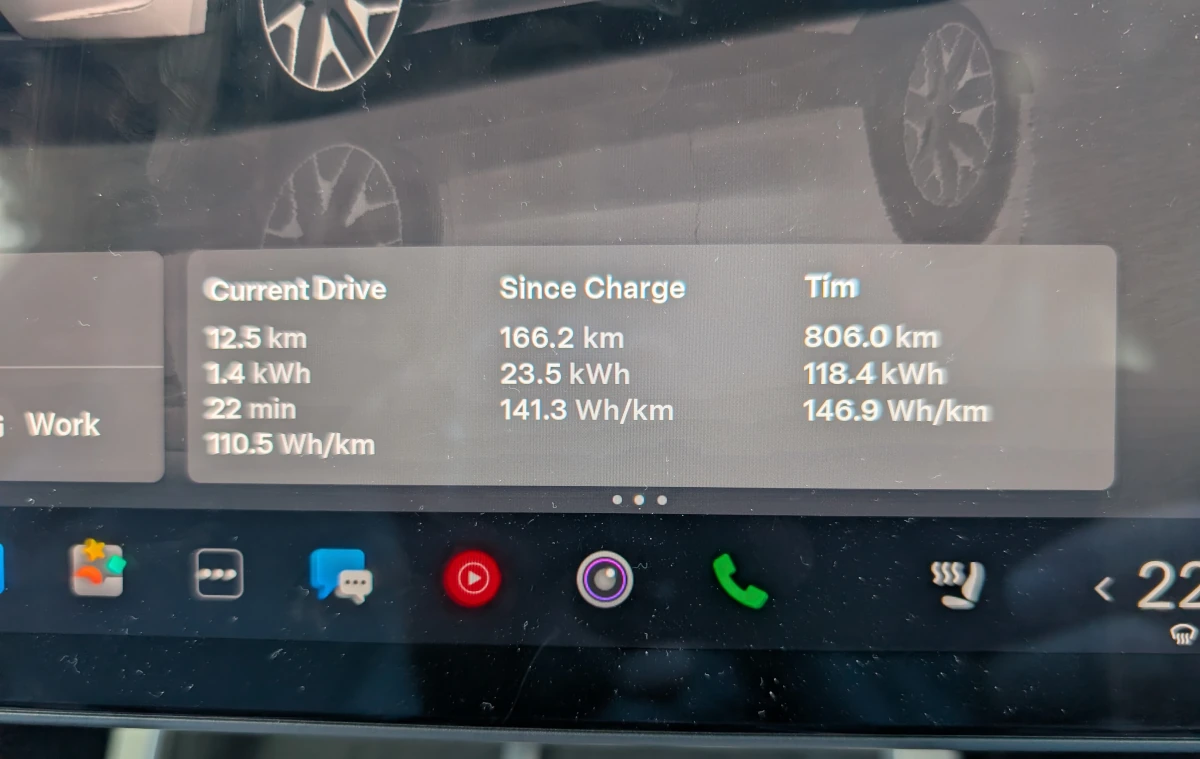
The longer wheelbase, seats and battery pack add an extra 96 kg to the kerb mass, so the Model Y L totals 2,088 kg all up without passengers. During my week with the car covering more than 800 km, mainly at highway speeds mind you, I observed energy usage of 146.9 Wh/km.
During some shorter trips around town I saw figures as low as 110 Wh/km as per the left side of the image above, which is voodoo level stuff for a large 6-seat family SUV like this. I cannot understand how Tesla manages such efficiency, but I guess it comes from years of iteration and small changes that add up over time.
To illustrate the range in practice, I left home in Sydney for the long weekend with 90 % charge, and arrived at Kiama for lunch with 70 % left. We drove on to Pretty Beach to camp 1 night, then left the car parked at Maloney’s Beach for 3 days before visiting our friend’s place near Milton on the way home, arriving there with 12 % remaining.
After charging back up to 30 % on their 11 kW charger powered by a massive 30 kW solar system, we had enough energy to make the trip all the way back home. We did stop again at the Figtree Supercharger for a quick toilet and food break, and by the time we came back to the car it was already at 66 %.
Great value against 3-row SUV competitors
The 2 main competitors in the 3-row electric SUV space are Kia’s EV9 and Hyundai’s Ioniq 9, both of which I have tested previously on similar road trips. The biggest difference among these 3 cars is the price point and value for money.
Starting from $74,900 plus on-road costs, equating to $81,000 on the road in NSW in Pearl White or $83,000 in other colours, the Model Y L is around $20,000 cheaper than the entry level EV9 Air. However, the EV9 Air comes with only 443 km range and also misses out on some of the interior comfort and features of the Tesla.
Longer range versions of the EV9 are more than $110,000 once registered, and the Ioniq 9 starts from nearly $120,000, plus an extra $2,000 if you opt for the equivalent 6-seat layout. By default the Kia and Hyundai do come with 7-seats if you need to carry an extra person though.
Lastly on price, it is worth noting that only the entry level EV9 Air qualifies for the fringe benefits tax exemption, while even the most expensive Model Y L is easily underneath the fuel-efficient luxury car tax limit, so keep this in mind if considering a novated lease.
Looking at 3rd row amenities is a mixed bag. Both the EV9 and Ioniq 9 have power reclining and folding seats with dedicated air-conditioning vents like the Y L, although they miss out on heated seats for those cold little bums.
The Kia and Hyundai have the upper hand when it comes to outright space and comfort in the 3rd row, due to them being wider at the back with better shoulder room, plus more foot room from flatter floors. The Y L has a slightly raised floor behind the 2nd row, and if both rear seats are occupied you need to take turns stretching a leg down the middle.
Power options are also better in the EV9 and Ioniq 9 duo with V2L in the boot of the Kia and 100 W USB-C ports in the Ioniq 9 that are powered directly from the high-voltage battery. The Model Y L has 2 USB-C ports under the 3rd row seats, although they are not as powerful for charging larger devices.
As described above, efficiency of Tesla vehicles is unmatched, especially when compared with the 2,300 to 2,600 kg kerb mass of the Kia EV9 depending on variant, and roughly 2,500 kg for the Hyundai Ioniq 9. I saw efficiency between 210 – 220 Wh/km during my road trips with these 2 vehicles, which adds up, especially when charging on DC fast chargers.
Conclusion
After spending a week with the Model Y L, I came away very impressed with this car. It improves on the already great refreshed Model Y in numerous ways including versatility, practicality, range, comfort, driving dynamics, as well as finally bringing much needed V2L functionality for the brand.
There really are no downsides to the Model Y L that I can think of, apart from it being a large car measuring nearly 5 m long. It is 177 mm longer than the 5-seat Model Y, but you get a more practical and spacious interior for sure. The 3rd row is very usable, but probably still best suited to smaller adults or kids on longer trips.
I can see the Model Y L being a very popular car in Australia, helping the Model Y to stay on top of the EV charts for the foreseeable future. While picking up the press car, I got to look at the giant delivery centre in Sydney where Tesla says they are currently handing over 100 cars each day. There were a lot of Model Y Ls among them too.
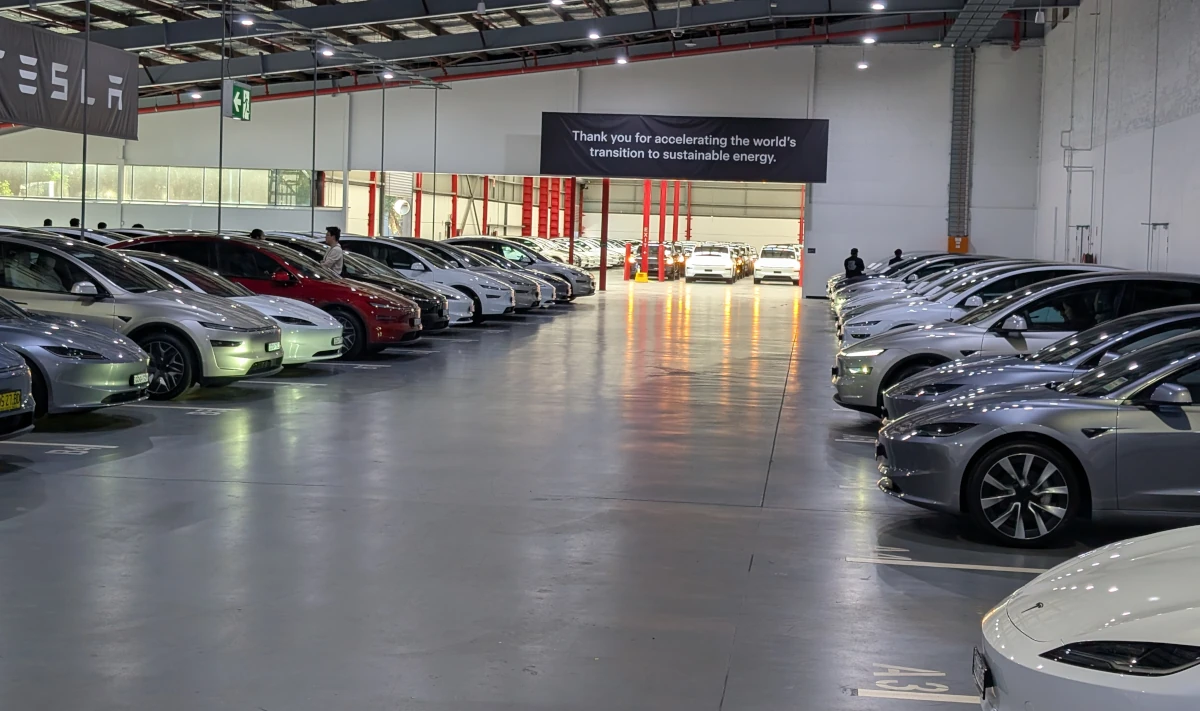
Table of key specifications for Tesla Model Y L
| Starting price | $74,900, plus on-road costs | ||
| Paint colours and options | 6 exterior colours:
2 interior colours:
| ||
| Battery size | 88 kWh gross, 82-86 kWh usable | ||
| Battery chemistry and manufacturer | NMC, LG Energy Solution | ||
| Range | 681 km WLTP | ||
| Driven wheels | All-wheel drive | ||
| Power / Torque | 378 kW / 590 Nm | ||
| Maximum charging speed | 11 kW AC, 250 kW DC | ||
| Charging time | 7 kW AC (0 – 100 %) – 13 hours 250 kW DC (10 – 80 %) – 28 minutes | ||
| Bidirectional charging | Yes: V2L up to 3.5 kW, via external adapter | ||
| Exterior dimensions | Length: 4,969 mm Width, mirrors folded: 1,982 mm Width, mirrors extended: 2,129 mm Height: 1,668 mm Wheelbase: 3,040 mm Ground clearance: 169 mm | ||
| Kerb mass | 2,088 kg | ||
| Storage space | Frunk: 116 L Boot, 6 seats up: 420 L Boot, 4 seats up: 1,076 L Boot, 2 seats up: 2,423 L | ||
| Service interval | Condition-based, as needed. Regular maintenance items:
| ||
EDIT: updated to correct that the front 2 rows of seats are ventilated, not just the front seats.