In 2010/11, it seemed the market leader mantle for making battery electric cars was going to be a tussle between established Japanese manufacturers and the US upstart Tesla.
Japan appeared to have the early lead, as Nissan and Mitsubishi were the first to get mass-production BEVs to market, Mitsubishi in 2010 with the BEV converted i-MiEV and Nissan in 2011 with the first ever ground-up design BEV, the Leaf.
But the reality is that Tesla stole the march in 2008 with their converted Lotus Elise (the Roadster – of which only around 2,450 were sold), even though it wasn’t till 2012 that Tesla brought their first production model, the Model S, to market.
From there, Tesla kicked-on and Mitsubishi didn’t do much beyond a van version using the iMiEV drivetrain. (And only now are Mitsubishi about to bring out a new BEV passenger car). Nissan limped on with gentle updates of the Leaf (plus a van version called the e-NV200) until the Renault-Nissan shared-platform Ariya arrived in 2023.
The other Japanese makers (Toyota, Mazda, Honda, Suzuki, Subaru) have all been late to the BEV party and are losing market share everywhere in the world as ICE powertrain sales fall. Elsewhere, whilst the European manufacturers iterated slowly, BEV sales there have skyrocketed with the new Chinese BEV manufacturers becoming the beneficiary.
Even 10, 15 years ago people (including me) were writing about how China was stealthily (and single-mindedly) using their local market to develop BEV technology and manufacturing in order to hit the world running in terms of mass-produced quality, reliable and cheap BEVs.
The take-home message was that if the legacy auto manufacturers didn’t take notice, they were going to be swamped once the Chinese reached the point of building cheap, safe and reliable BEVs of a quality fit for export. Sadly, it seems legacy auto didn’t take-in the message and that scenario is now playing out.
It would also seem that the Japanese auto manufacturers exemplified that head-in-the-sand approach to BEVs, pursuing instead HEV and PHEV technologies, which ultimately are based on ICE tech. The result has been a less-than-stellar uptake of BEVs in the Japanese market – in part due to the local manufacturers not offering many.
So where is the Japanese market now? Well, according to the Japan Automobile Sales Association, new passenger car BEV sales in the first half of the Japanese financial year (Apr-Sept) hit a record high, coming in at 4.6% of the market, which is more than three times the same period last year.
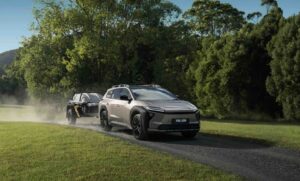
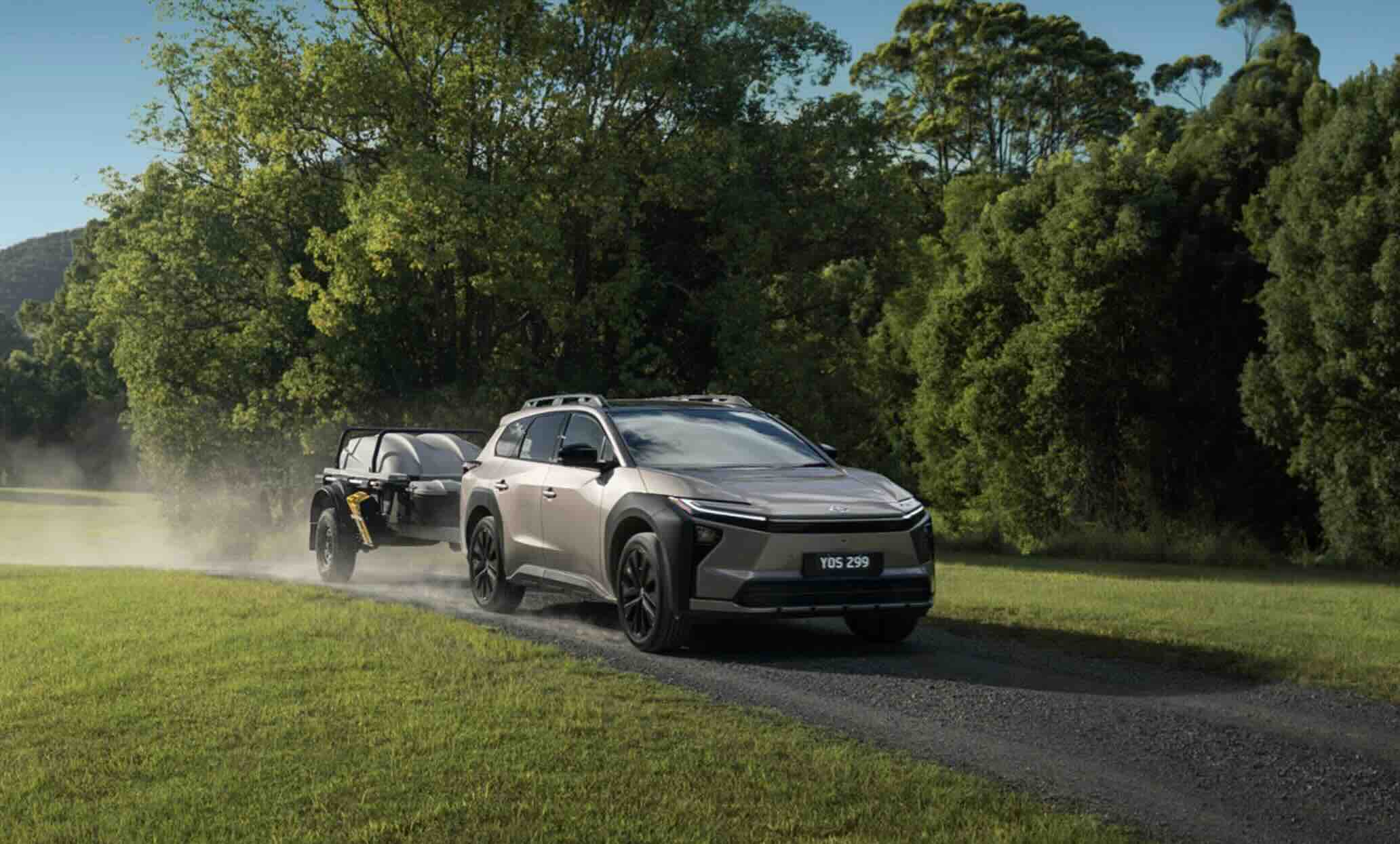
The best-selling models for the period were the Toyota bZ4X (at 88 times the same period last year) and the Nissan Leaf. It would seem two factors are driving the change: an expansion of models by the Japanese auto manufacturers (such as the Honda Super-One, which is based on the diminutive Japanese Kei car specifications) and changes to the Japanese government’s Clean Energy Vehicle (CEV) program.
Unfortunately for the local manufacturers, the second biggest beneficiary of the subsidy so far has been Tesla – second only to Toyota and ahead of Nissan and Honda.
At 4.6% of the passenger market (and 3.7% of all vehicle sales), Japan is now well behind most of the rest of the world in BEV sales. Even the US (which is becoming the laggard of the western world due to Trump’s less than enthusiastic embrace of them … despite his accidentally strong push of late to wean the world off fossil fuels) sits at around 10%.
But, given Japan’s diminutive Kei specification cars make up around 40% of the registered cars there (such as the new Honda Super One and the early Mitsubishi iMiEV) it is a difficult market to predict.
One thing that can be said though is whilst one day the Japanese market will be all BEV, it will be a bumpy road until sales hit the magic ‘early majority’ buyer segment. After that, the change will take on its own momentum. The key question for Japan though (like Europe and the US) is will the local auto manufacturers adapt in time to survive?