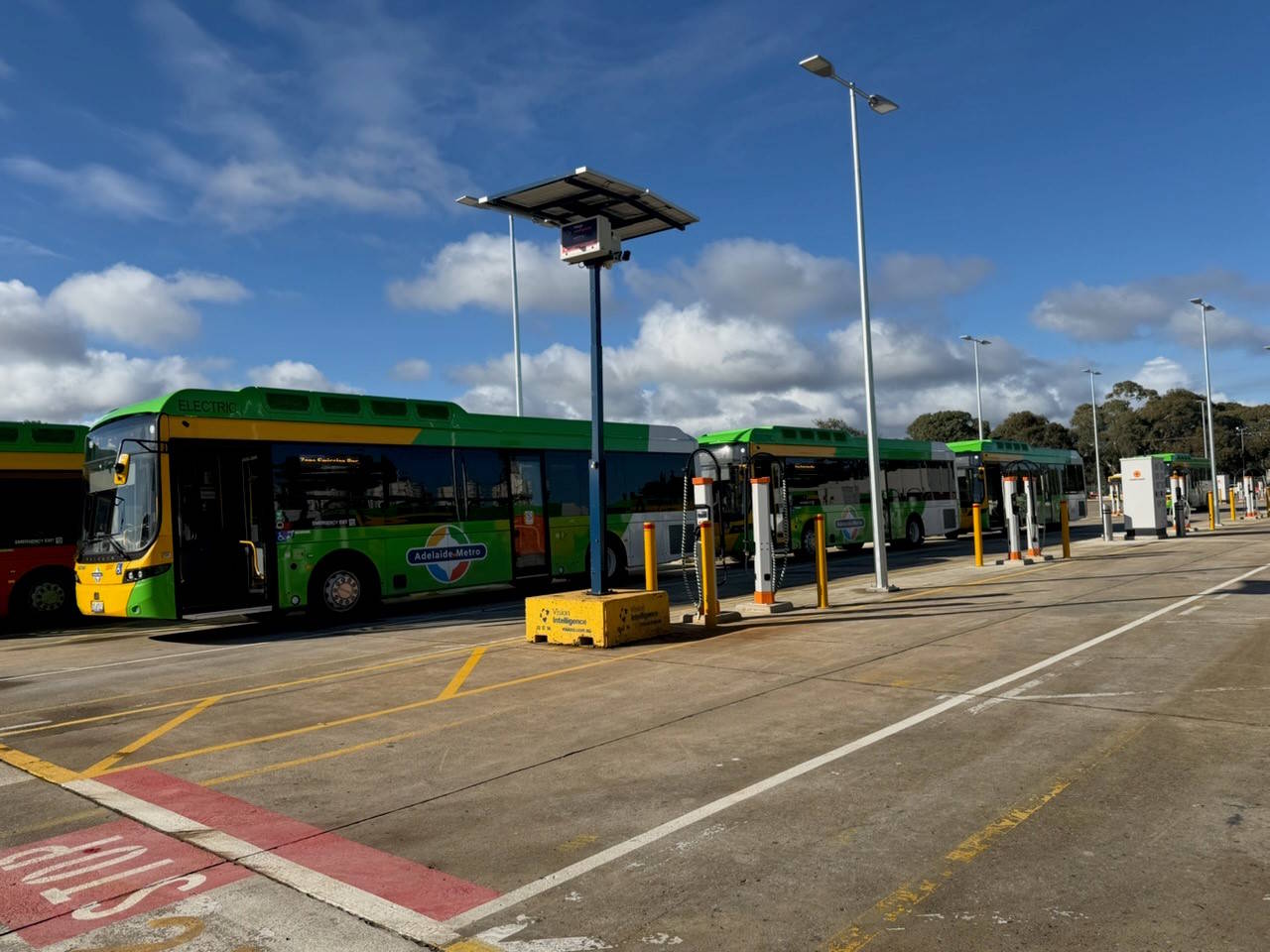
Victoria’s Labor government has doubled down on its goal of transitioning the entire state to zero-emission buses, just a month after the Queensland LNP government dumped its own plans to go electric and decided to tender for 630 new diesel buses instead.
The Victorian government last week opened the tender for its Metropolitan ZEB (Zero Emission Bus) Franchise 2 (MZF2) procurement process, which represents four new bus franchises that cover around 40 per cent of Melbourne’s bus network, or around 800 buses.
Victoria announced its official roadmap to electrify its bus fleet in late 2024, building on the commitment that all new public transport buses purchased from July 1, 2025, to be zero emission buses.
Franchise contracts for a third of Melbourne’s bus network – billed as the state’s first zero emission bus contracts – had already been awarded back in September of 2024, covering 131 public routes and more than 230 school services across Melbourne. The new MZF2 process covers around 800 vehicles and 49 million service kilometres each year.
The announcement is in stark contrast to Queensland’s announcement at the start of September which promised to deliver 630 new diesel buses, with its minister for transport and main roads Brent Mickelberg dismissing electric buses as a big “paperweight” that would block city roads.
Julie Delvecchio, the CEO of the Electric Vehicle Council (EVC), highlighted on her LinkedIn account on Monday that only one of these two states are thinking about the future.
“Every diesel bus ordered now is a fuel bill, a tailpipe, and a decision we live with well into the 2030s,” said Delvecchio. “Every electric bus ordered now is the opposite.
“And it means more than new buses. It means investment in electric buses, depot charging, and the infrastructure needed to run a modern zero-emission fleet.
“Cheaper to run, quieter on our streets, cleaner for the communities they serve.”
Queensland’s diesel buses will continue to run well past 2032 Summer Olympics to be held in Brisbane – a black mark which will be on display to the world as they descend on the Games.
The contrast, therefore, between Queensland and other states couldn’t be starker. The EVC’s own State of EVs government scorecard shows how far Queensland is falling behind other states – though it is not alone.
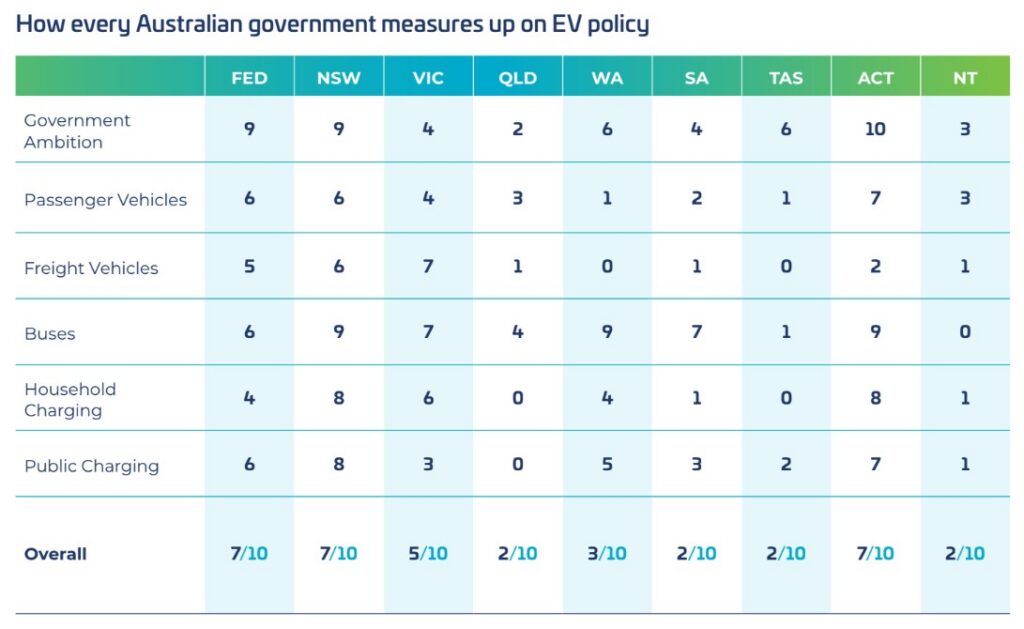
New South Wales and the ACT are leading the way on overall EV policy, and on electric buses in particular – while Victoria lags a bit behind in virtually every category but is still doing better than the laggards of Queensland, Tasmania, Northern Territory, and South Australia.
Western Australia, on the other hand, is not doing particularly well overall, but is up along with NSW and the ACT when it comes to electric buses.
WA stopped buying non-electric buses in 2025, ensuring that each new bus is not only electric, but also built in Malaga.
Sign up for The Driven’s free daily newsletter and get the latest EV news and analysis delivered straight to your inbox.