Australia is finally catching up with the rest of the world in the adoption of electric cars, but on the transition to electric trucks and electric vans – despite some big publicity around a few government-funded trials – the market has barely moved.
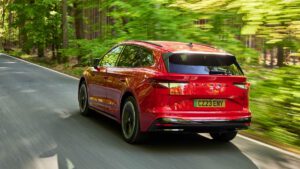
In 2026, more than one quarter of new electric cars have been plug in electric cars, with two-thirds of these being full battery electric vehicles. BEVs took more than 24 per cent of the new car market by themselves in the month of August.
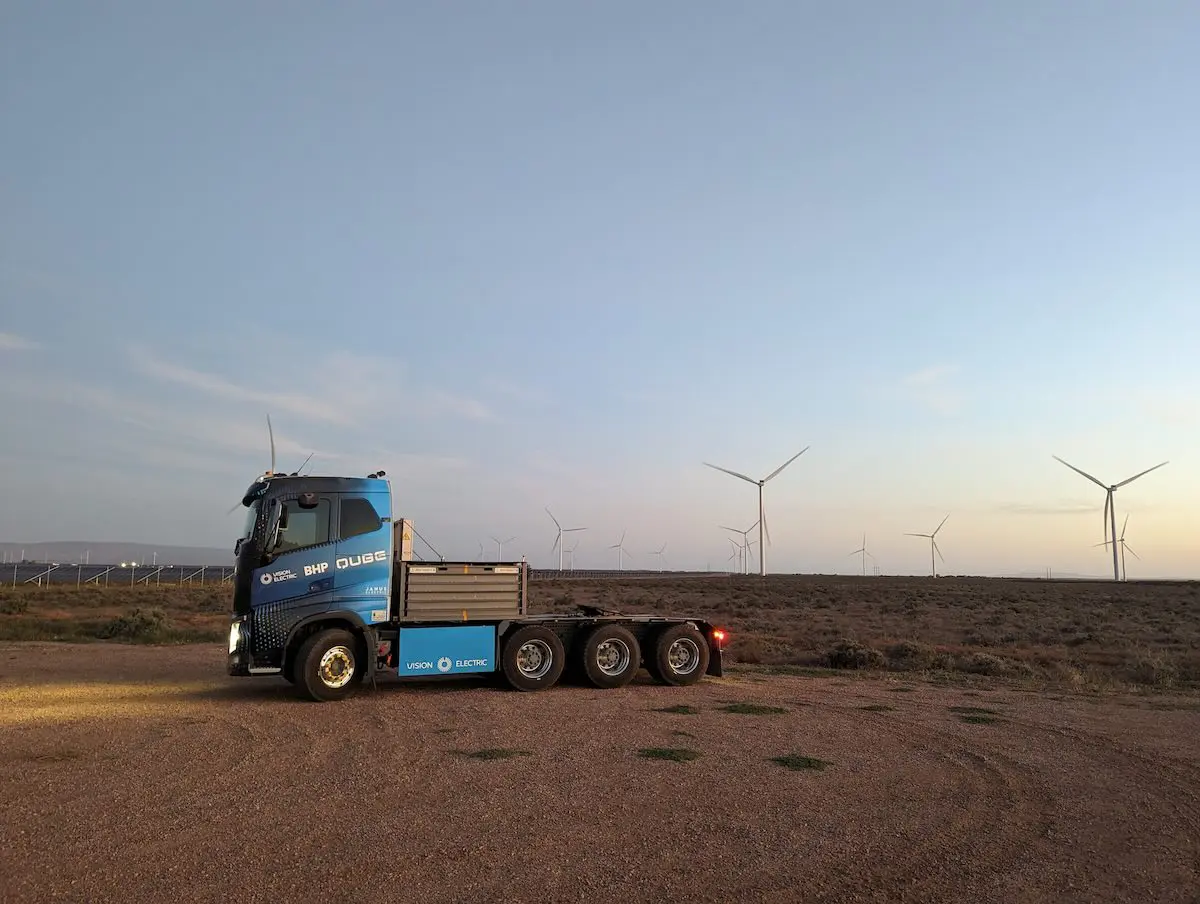
Even electric buses accounted for 26 per cent of new purchases in Australia (although why it is not already close to 100 per cent beggars belief), but only one per cent of new van sales have been electric this year, and just 0.1 per cent of new trucks.
“The reason for (the strong sales in cars and buses) is government has really invested in setting targets and working towards them,” says Julie Delvecchio, the CEO of the Electric Vehicle Council, which released its State of EVs 2026 report on Wednesday. “When we look at heavy vehicles, it’s a completely different proposition. Of the trucks sold last year, barely 200 were electric.
“So we’ve got a massive gap here that we think needs to be to be closed. The reason why we think it matters is, 2026 really was the year that showed us why we need to electrify our heavy fleet.
“With diesel hitting $3 a litre, we know that the fuel crisis has really driven home how reliant we are on imported fuel, and every truck that is electric is an upgrade to Australia’s energy security. But we’ve barely touched the sides on that transition.”
The EVC says electric truck owners in Australia – most of whom are family businesses or owner-operators – do not get enough financial support to meet the upfront capital cost of electric trucks, which still remain twice the price of diesel trucks, although the gap is falling.
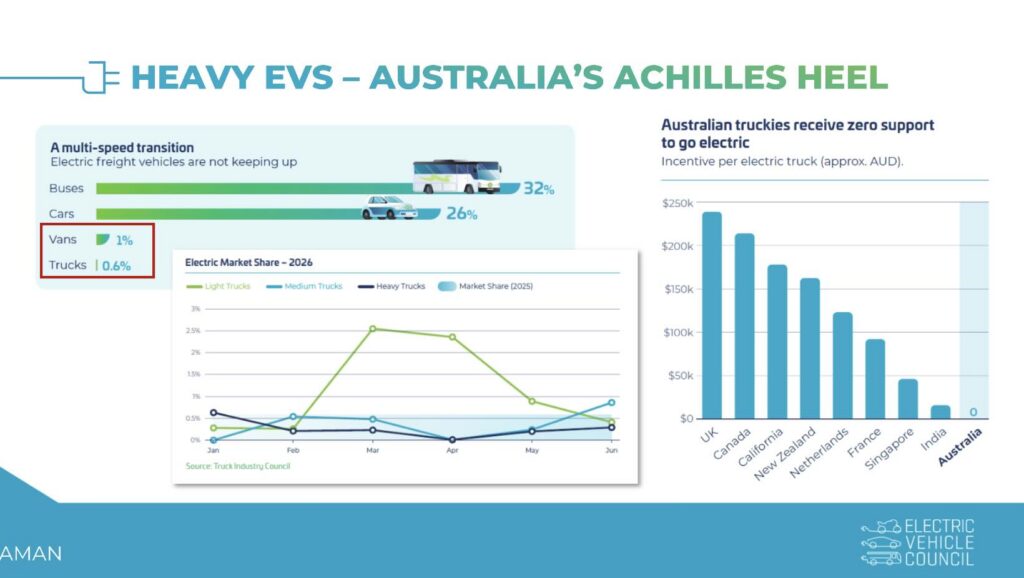
“In comparison to the UK and Canada, which have very similar emissions reductions targets and have very similar countries in many respects to us, they offer up to $250,000 of trade per truck to electrify,” says Aman Gaur, the head of policy at the EVC.
“Australia offers a big fat zero. Not only that, but there are countries who are not even considered rich countries, as it were, who are offering more than us.
“In a country that is so dependent on importing diesel, and we have been discussing at length about the fuel insecurity of our country, it is somewhat shocking that we continue to be so dependent, not only on diesel but also that we are not making significant efforts to try and get off that dependency.”
Gaur says that one of the big misconceptions of Australia’s freight industry is that it is dominated by the Linfoxes and the Volvo’s of the world. But most of the people that bring groceries to the supermarket or deliver Amazon products are trucks and vans that are owned by mum and dad businesses who own one, maybe two diesel-run vehicles, trucks or vans.
“For them at the moment the capital cost of moving to an electric version of that vehicle is up to twice the cost. So why would you move? There is no incentive because you are so capital constrained. You cannot make that change.
“Sure, you can get that total cost of ownership savings over 15 years, but when you’re in a cash-strapped business, you really need government to come to your support and help access those real savings over 15, 20 years.”
Gaur says the EVC is talking with governments and the Australian Renewable Energy Agency about different approaches to devise financial instruments that could address the issue.
“There are really good options that have come out of California (where Janus Electric has landed some significant contracts) that we’ve put to them, which address that capital cost difference,” he says.
Sign up for The Driven’s free daily newsletter and get the latest EV news and analysis delivered straight to your inbox.