Vandals have severed the cables of 28 Tesla Supercharging bays in central Victoria in a weekend attack that appears to be the biggest of its type to date – but just one of a growing number of incidents that is causing great concern to the industry, and disruption for motorists.
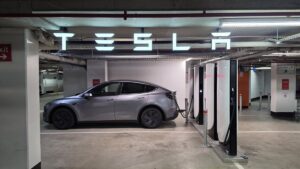
The sites struck over the weekend include the newly expanded 20-bay Lucas Supercharging station in a shopping centre car park outside Ballarat, and the Ballarat Supercharging site in the centre of the city.
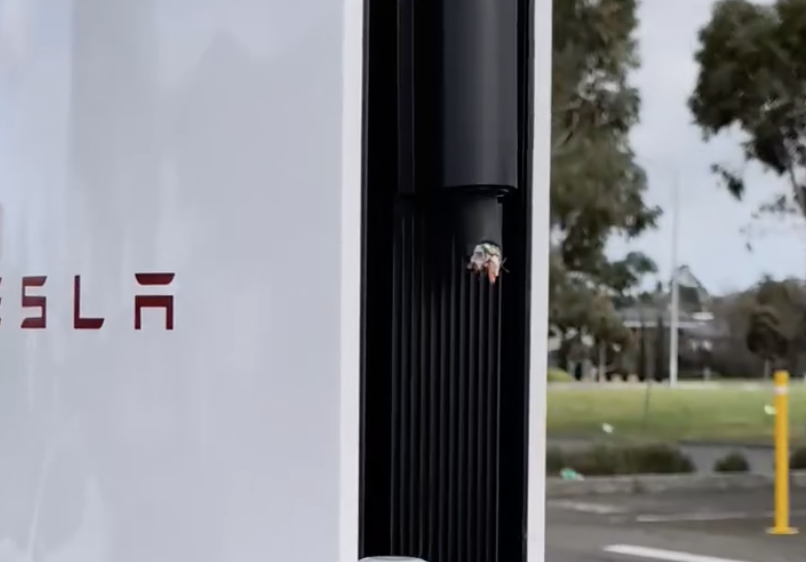
Videos and photos posted on social media showed the cables being cut at all charging bays. Often this is blamed on criminals seeking copper to sell, but the value of the copper in these cables is negligible, according to some sources. Replacing cables costs between $2,000 and $5,000 each.
The damage comes in the middle of the school holiday season in Victoria, so will likely be disruptive to many EV drivers on vacation.
The industry is concerned about the rapid rise of vandalism – and the role of copper hunters. In June, a 29-year-old man faced court in NSW after being charged with damaging nearly a dozen EV charging stations in that state, and sealing multiple plugs and cables.
NSW Police said in a statement at the time that the EV charging stations in Newcastle and Central Coast had been damaged in June – between June 12 and June 30. Locations affected included EV chargers in Newcastle, Hamilton, Kotara, Wallsend, Swansea, Warners Bay, Heatherbrae, Raymond Terrace, Tuggerah, Erina, and Gosford.
Tesla supercharging sites are not the only target. Evie Networks says cable theft has become a problem for it, as it has for every charging network in Australia.
“It’s worth saying up front that this isn’t really an EV story: it’s a copper story,” said Evie Networks’ Geoff Brady. “The same thieves are taking cable from telecommunications pits, construction sites, rail corridors etc. Charging sites are just a newer target on the same list.
“For us it has increased over the past 12–18 months, broadly tracking the copper price and the growth in the number of sites out there. It’s still a small proportion of our network in any given month, but it’s no longer rare.”
Brady says charging networks are working with police and putting pressure on the scrap metal parade. “The single most effective intervention isn’t at the charger, it’s at the point of sale for stolen metal,” he says.
Evie Networks is also installing cable protection on units, including mesh and shields, identifying ink, cameras and alarms at higher-risk locations, lighting and site selection, and working closely with the landlords and centre operator, as most of its sites sit in car parks already managed by third parties.
Sign up for The Driven’s free daily newsletter and get the latest EV news and analysis delivered straight to your inbox.