Chinese car maker Xpeng has officially launched its newest model in Australia, the L03 electric “SUV coupe”, that features a range of technical innovations at a price point that challenges some of its biggest rivals, including Tesla, BYD, Kia, Hyundai and other Chinese car makers.
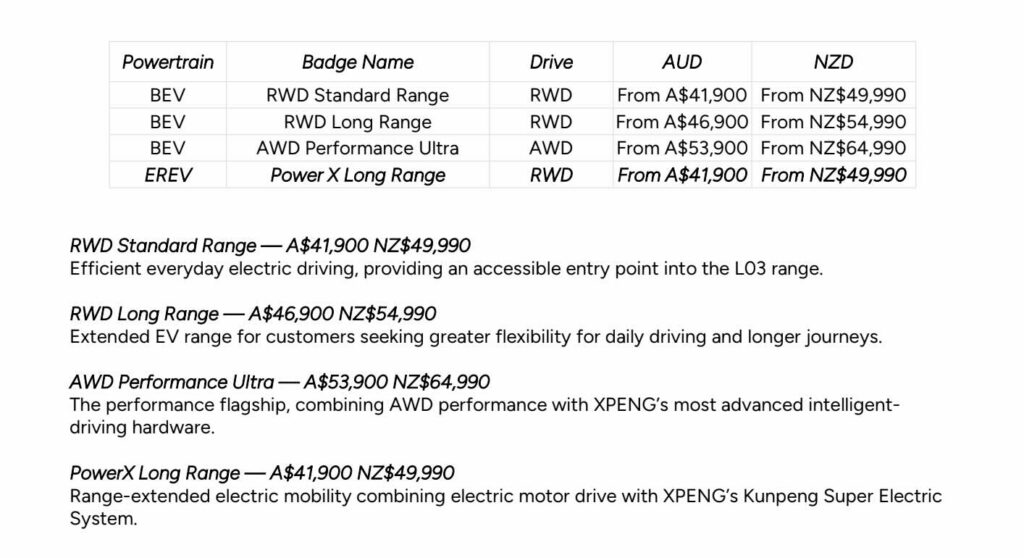
The L03 (L zero three) follows the popular and well-received G6 electric SUV and is priced from $41,900 for the RWD standard range variant, and up to $53,900 for the performance range.
The electric model comes with a 73 kWh battery and a driving range from 440 km to 520 km (WLTP), but the company is also offering an “extended range” model that combines a 37 kWh battery with an onboard petrol generator (and a 45 litre tank) to lift the range to more than 1,000 kms. The generator charges the batteries, and the drive train remains electric, unlike plug-in hybrids.
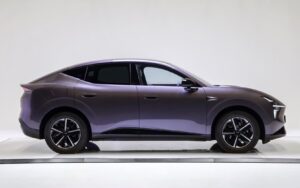
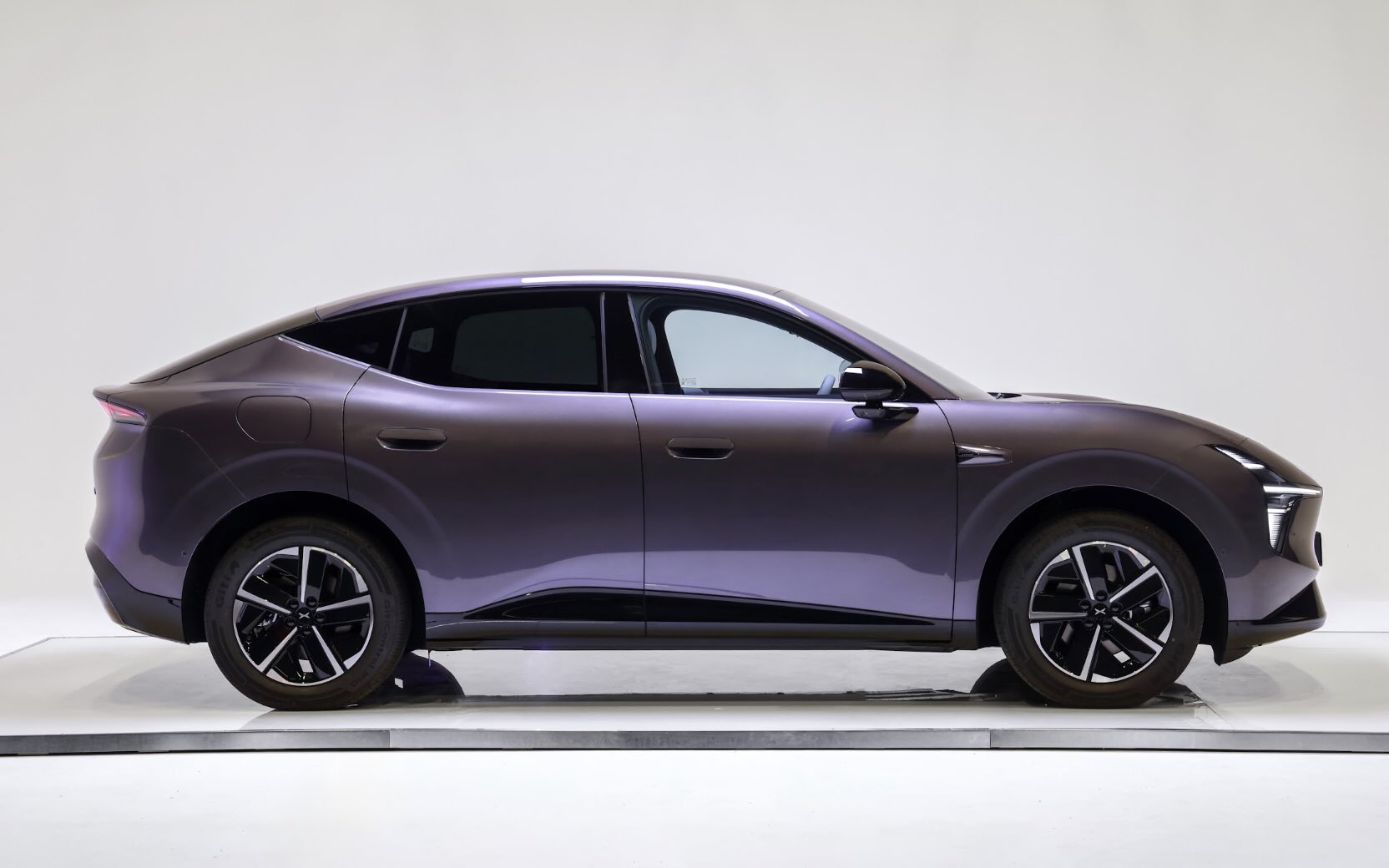
Xpeng has often been described as the “Chinese Tesla”, and the Xpeng G6 certainly has similar design features to the top-selling Tesla Model Y. The L03 shares a familiar design, delivered in this case as a “fast-back” silhouette. It’s 4.65 metres long, about the same length as the original Model 3, but with the curves of a Model Y.
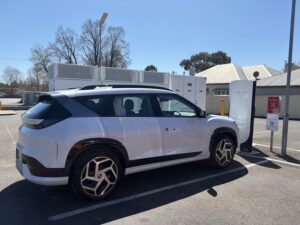
Xpeng has had some success with the G6 (the federal energy minister Chris Bowen drives one), particularly with the relaunch that achieved nearly 500 sales in the month of August (see The Driven’s month by month sales data).
The company is coy about its targets for the L03, but clearly has ambitions given the establishment of its extensive dealer network across the country.
“We have a lot to prove,” says Damien Royce, Xpeng’s head of market and productivity in Australia and New Zealand. “I want to grow and accelerate the brand.”
Royce admitted that with the G6 “not enough people know about it”. He hopes that changes with the smaller and lower priced L03. “Once both vehicles are in the showroom, that’s where people will start to learn.”
Xpeng wants to be regarded as an “intelligent, smart, forward thinking brand.” And on those lines it clearly does compare itself with Tesla – it has its own version of FSD – called NGP (next generation pilot) – that it hopes to roll out in Australia in 2027. Its launch of the L03 in the Gold Coast on Wednesday also featured a flying car and the Iron, a humanoid robot.
The L03 comes with some interesting features – including a storage draw under the back seat, a reasonably sized frunk (102 litres), good boot space, a glass roof and minimalist features – with the now standard centres screen augmented by a smaller screen behind the steering wheel.
It also comes with vehicle-to-load and a pretty impressive parking assist for tight spaces at shopping centres and home garages.
Xpeng’s chief designer Joan Melenchon says the design signatures come from the fact that Xpeng – like Tesla – has started out with electric vehicles, and is not encumbered by having to think about internal combustion engines, and features such as air vents.
“Why are people still shaping a car as though it has an internal combustion engine,” Melenchon says. He talks of “vital” and “emotional” flows in the design. There are few if any hard edges. The interior, he says, “is shaped as a room, not a machine.”
The extended range – a popular addition to many Chinese EV models, is the response to the long distances in Australia, and the absence of home charging for many, and is deliberately priced the same as the base model full battery electric.
“It means planning less, less searching for chargers, more spontaneous weekends,” says Royce. It will be interesting to see how that sells.
The AWD version of the fully electric L03 will get from zero to 100 km/h in 4.5 seconds, and the RWD version in 6.6 seconds.
It has a low drag coefficient of just 0.228, and a 2850mm wheelbase offering a comfortable space for five. The roomy cabin combines a 15.6-inch central display, immersive ambient lighting, intelligent climate control and lounge-style seating, along with 37 storage spaces. Its towing capacity is rated at up to 1.5 tonnes.