Between 2011 and now, around 450,0001,2 battery electric vehicles (BEVs) have been sold in Australia. Whilst a few may have been taken off the road due to accidents etc, there are still a lot of them sticking around to make up Australia’s growing second-hand BEV market.
Prior to 2023, only 66,0001 had been sold, so second-hand buys back then were few and far between, with prices kept high due to the shortage of supply. This does mean though that the vast majority of EVs on the second-hand market today are less than four years old.
Interestingly, leased vehicles are commonly on 2- to 4-year plans, and corporate fleets generally turning their vehicles over at around 4 years. Together, they add up to a growing number of ex-lease 2023 and 2024 models coming to market now, as well as early adopter 2022 fleet cars.
So what models are coming up now? And where do you find them?
Back in 2022 the main models going into fleets were three Hyundai models (Ioniq update with the 38kWh battery, Kona and Ioniq 5), Kia Niro, second generation Nissan Leaf, early MG ZS, the occasional Kangoo ZE van … and not a lot else.
Given those early adopter fleets were mainly local governments along with some state governments – these BEVs in particular will likely have been treated well and come with low kilometres.
Alongside these are the first of the four-year lease-end vehicles as well as a tranche of three- and two-year lease term vehicles.
These latter open up a much wider range of model options as the BEV market had expanded from 19 passenger models in March 2023 to 75 by the end of 20243. (For a current listing of second-hand BEVs available in Australia, see https://www.aeva.asn.au/bev-fact-sheets-secondhand-bevs/ )
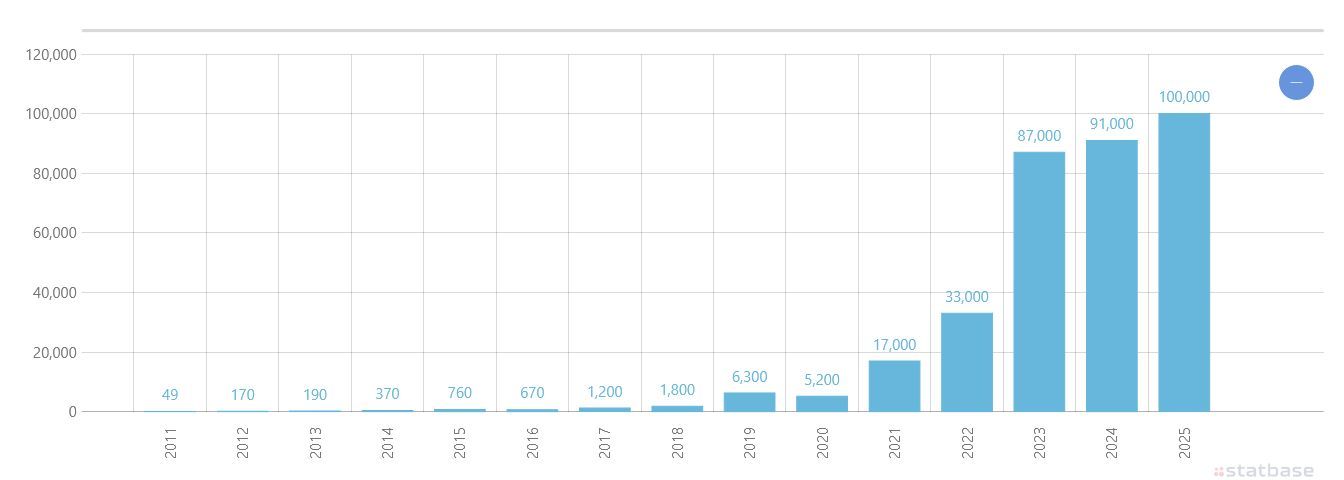
BEV take-up was also accelerated by the federal Electric Car Discount (ECD) that came into effect in January 2023, resulting in many more individually owned BEVs being bought under a lease.
As a result, the selling of individually leased vehicles is being incentivised by the end of these lease periods. These however may not have been looked after as well as government fleet vehicles as well as potentially clocking up greater kilometres.
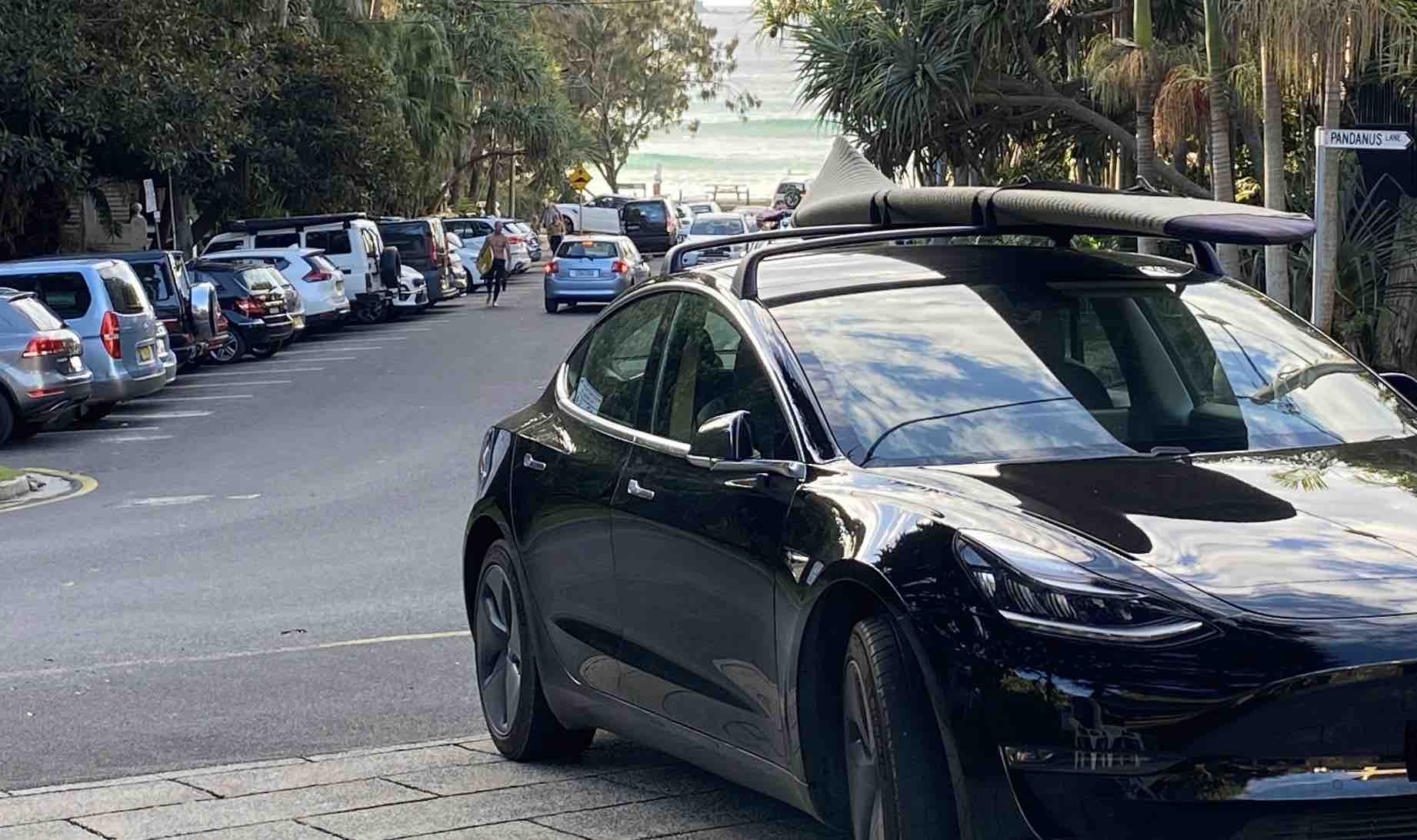
In addition, in the early days of the electric car discount, Tesla sales predominated, so there are many individually leased Tesla Model 3 and Model Y versions popping up in the 2-4 year-old category. (Note: not many Teslas were sold into Local Government fleets as they were commonly regarded as ‘luxury’ vehicles and therefore portraying the wrong image to ratepayers).
All this adds up to a rapidly growing number of BEVs flowing into the second-hand market via the major auction houses, as well some going through dealers as trade-ins and/or trade-only auctions.
Some are also popping in the private sales market where owners opted to buy out their BEV at the end of the lease period. Many are only two years old and offering significant discounts on new prices due to the usual vehicle depreciation levels as well as dropping new BEV prices placing downward pressure on second-hand versions.
As a result, the biggest place to look for a second-hand BEV is currently the major auction houses. Between the two largest (Pickles and Manheim), well over 100 BEVs are auctioned off a week.
There you will find a selection of mainly 2- to 4-year-old BEVs, mainly from government and business fleets, as well as end-of-lease vehicles from the leasing companies.
To give confidence in the second-hand BEV market, Pickles Auctions in particular supply 3rd party ‘battery health certificates’ with many of the BEVs they sell. (These can be viewed online as part of their listing).
Given these 2- to 4-year-old vehicles will still be under a significant proportion of their manufacturer’s warranty, this tends to make up for the downsides of auctions.
These downsides include that, whilst buying at auction provides a ‘clear title’, it does not provide any warranty and it is ‘caveat emptor’ with regards to what you get, so you need to check all details of the vehicle (battery size, trim level, build-date etc) carefully before deciding on your maximum bid.
If you’re not confident in buying at auction, or thinking of buying an older EV where much or all of the warranty has expired, there is the option of buying from a dealer where statutory warranty laws apply. Dealers too can offer good deals on almost-new ‘demonstrators’ that can be many thousands off the new price for a car that may be only 6 months old and done only a few 1000’s of kilometres.
Lastly, but certainly not least, are the private listings on the online platforms. As always though, you will need to carefully check the vehicle for all the usual items including for poor body/chassis repairs, suspension, tyres, lights, instruments, air-conditioning, etc, etc, etc as well as the battery electrical vehicle components. Battery health checks for instance can be commissioned for around $200.
Lastly, for private buying, it is imperative to research the ownership of the vehicle. In particular, whether there is an outstanding lease on the vehicle.
If there is, the ‘owner’ may not be entitled to sell the vehicle without the lease company’s approval, meaning it could be repossessed by the leasing company after you ‘buy’ it. Given the number of BEVs now being bought on lease-plans, this is becoming a greater danger than it once was.
Data:
- https://statbase.org/data/aus-bev-sales/
- https://www.aaa.asn.au/research-data/electric-vehicle/
- AEVA Fact Sheets. ‘New BEVs available in Australia’, March 2022, December 2024.
For a full rundown of all available EV models in Australia, please go to our Compare EVs page here.
You can find The Driven’s detailed EV sales data here: Australian electric vehicle sales by month in 2026; by model and by brand.
And you can sign up for The Driven’s free daily newsletter and get the latest EV news and analysis delivered straight to your inbox.