
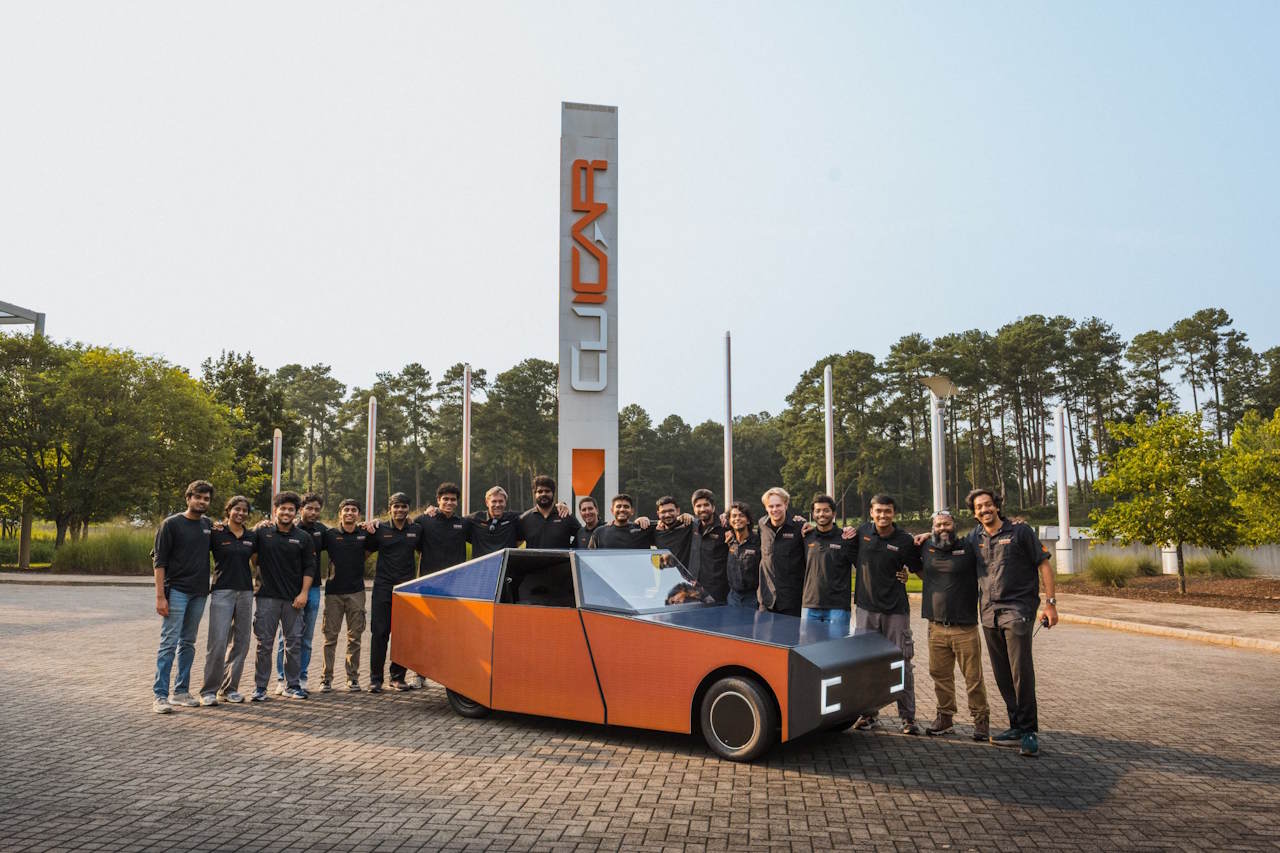
A team of graduate students from Clemson University in South Carolina in the US have designed a solar-integrated, energy-positive electric vehicle (EV) prototype that has been designed to generate more energy than it consumes during a typical day of urban commuting.
Developed as part of the university’s acclaimed Deep Orange program, where graduate automotive engineering students design, engineer, and build a fully functional prototype alongside industry partners, Deep Orange 17 was built in collaboration with both BMW and Fraunhofer Institute for Solar Energy Systems ISE.
Several companies have and are working out how to combine solar with EVs, but the most prominent – Sono Motors – was finally wound up this year after filing for insolvency in May of 2023 before it was brought back from the brink for a second effort.
The company rebranded to Sono Solar and refocused towards vehicle manufacturers and fleets, but the market and demand for integrating solar into vehicles has never materialised.
Nissan has also unveiled a prototype version of its top-selling Sakura electric vehicle (EV) that boasts an extendable roof-mounted solar system and a concept version of its all-electric Ariya SUV with an integrated solar roof.
And just last month Nissan was announced as leading a £10 million UK government-backed research project that aims to integrate efficient energy technologies into EVs, including solar.
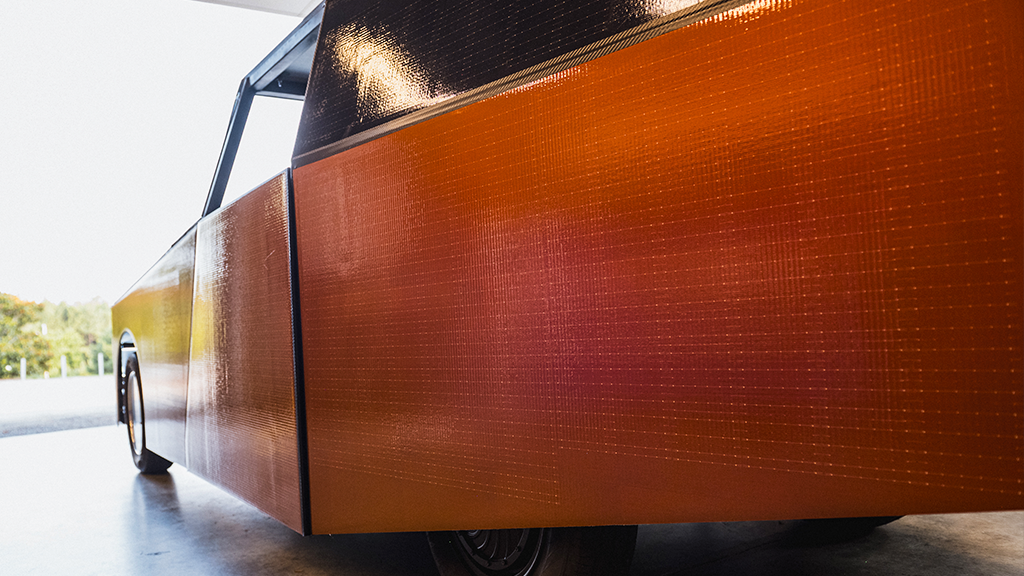
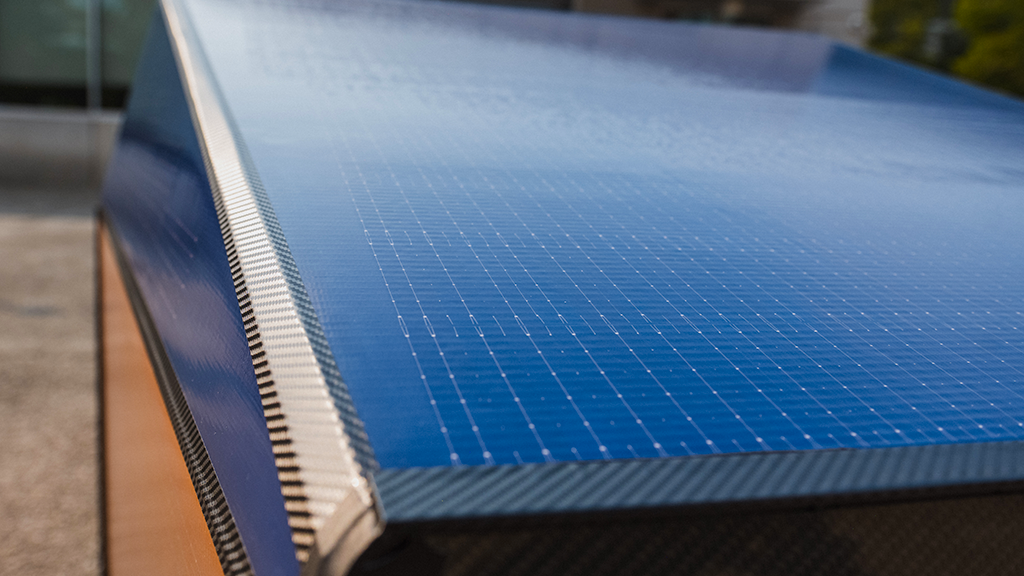
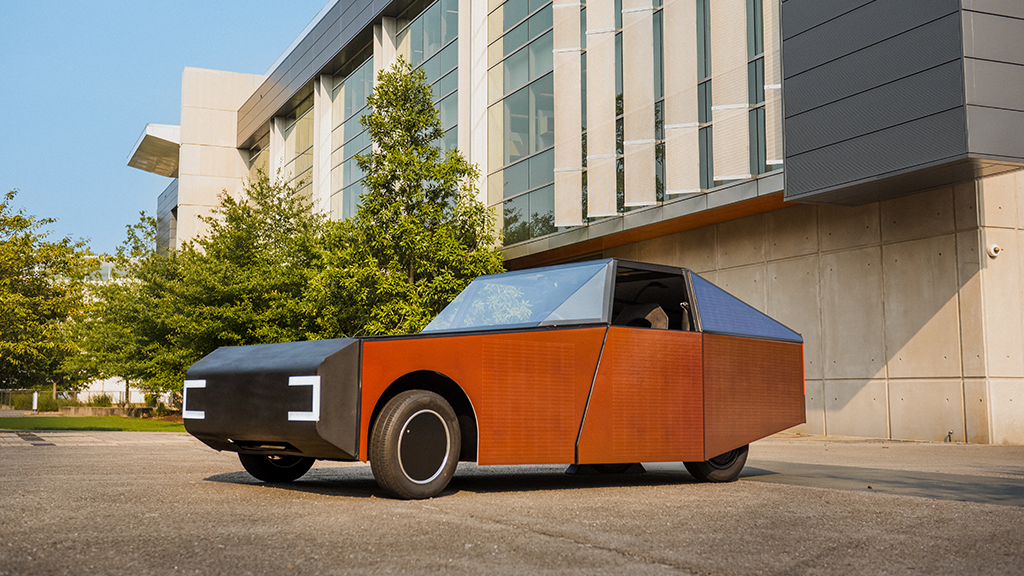
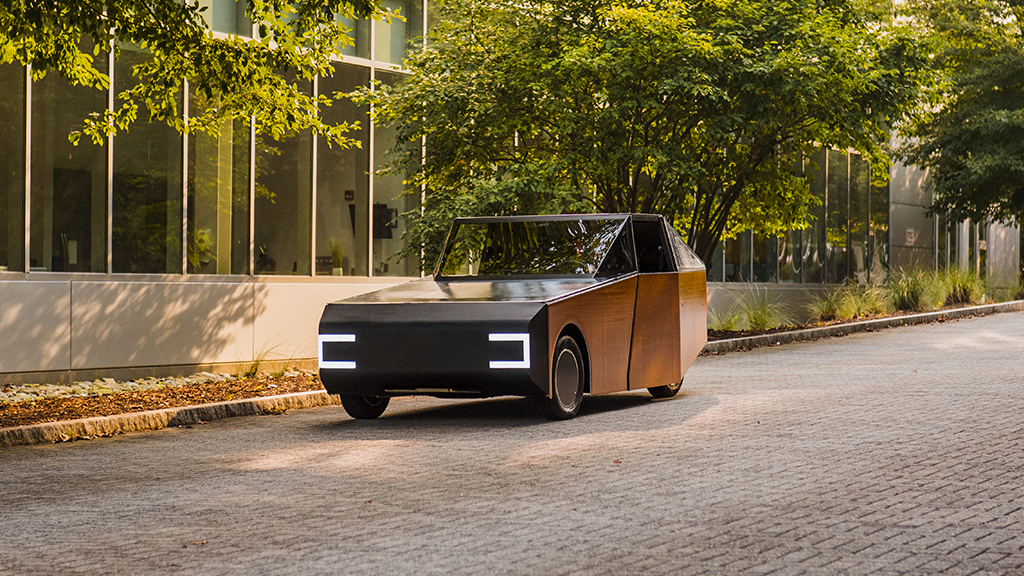
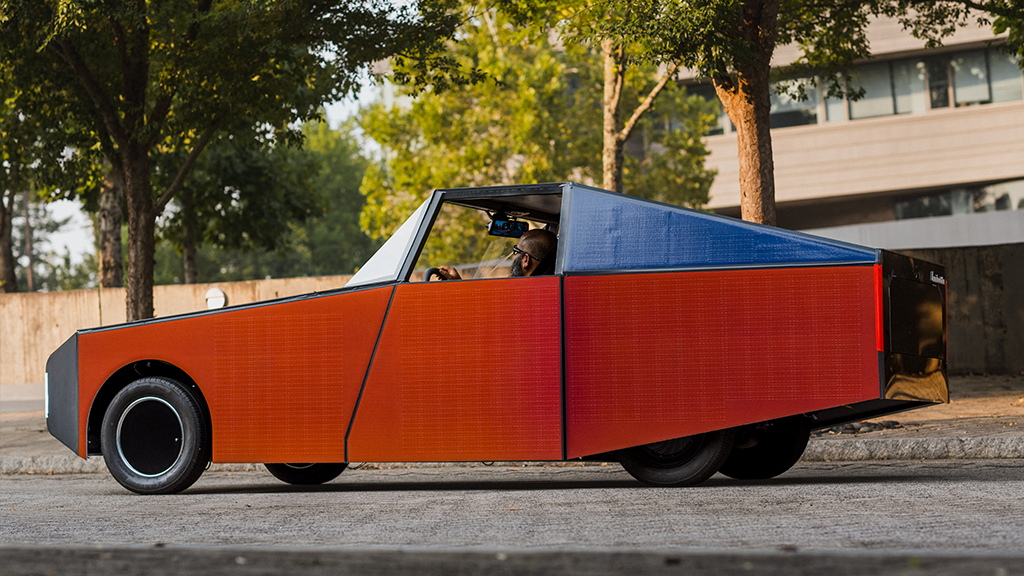
The Clemson University solar car admittedly looks a little like it was designed for a cardboard box car derby, or a repeat of the Flintstones movie. But Deep Orange 17 is nevertheless built around a fully integrated solar energy system that is a core part of the vehicle’s propulsion strategy – rather than just an auxiliary feature.
More than 1,700 solar PV cells are integrated directly into the two-door vehicle’s exterior surfaces, continuously replenishing the vehicle’s energy storage.
To evaluate the car’s real-world performance, the 16 automotive engineering master’s students modelled environmental conditions and sunlight availability in four locations – Greenville, South Carolina; Frankfurt, Germany; Madrid, Spain; and Mumbai, India.
Assuming a daily commute of 20 kilometres, Deep Orange 17 was able to generate enough surplus solar energy to provide an average of 50 kilometres of additional driving range across all four locations.
In order for the vehicle to generate more energy than it consumed, the students had to design the entire vehicle with efficiency in mind, from aerodynamics and lightweight construction to power electronics and drivetrain controls.
Deep Orange 17 weighs in at only 550 kilograms, a quarter the weight of many similarly sized production vehicles, while its multi-material chassis combines structural steel for passenger safety with aluminium components, carbon fibre structural members, and 3D-printed metal joints to maximize strength while minimizing mass.
The car also incorporates regenerative braking, intelligent torque distribution, and optimized drivetrain controls to maximise energy recovery and overall vehicle performance.
“This was an incredibly challenging project—not only to create a working energy-positive prototype, but to demonstrate how a vehicle can become increasingly energy independent through solar integration,” said Harsh Manghnani, Deep Orange team member and solar integration lead.
“Seeing our initial research and design validated in a working prototype has been incredibly rewarding.”