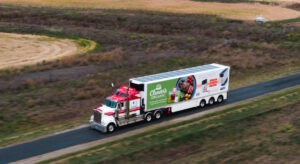
By now, China’s success story in electric vehicles is no longer news. In 2025, it became the first major market globally to surpass a 50% electric vehicle share of new vehicles sales, a clear sign the market has passed a tipping point.
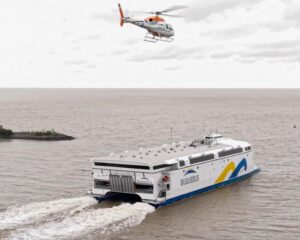
What has received far less attention, however, is that this electrification wave is no longer confined to roads, but is increasingly spilling over into the water with the electrification of inland vessels.
This momentum is clearly visible in the data. By the end of 2024, China had more than 440 electric ships in operation, with ferries accounting for 97% of the total fleet. This is not surprising given the relatively high technical and economic feasibility of electrifying small ferries operating on short, fixed routes.
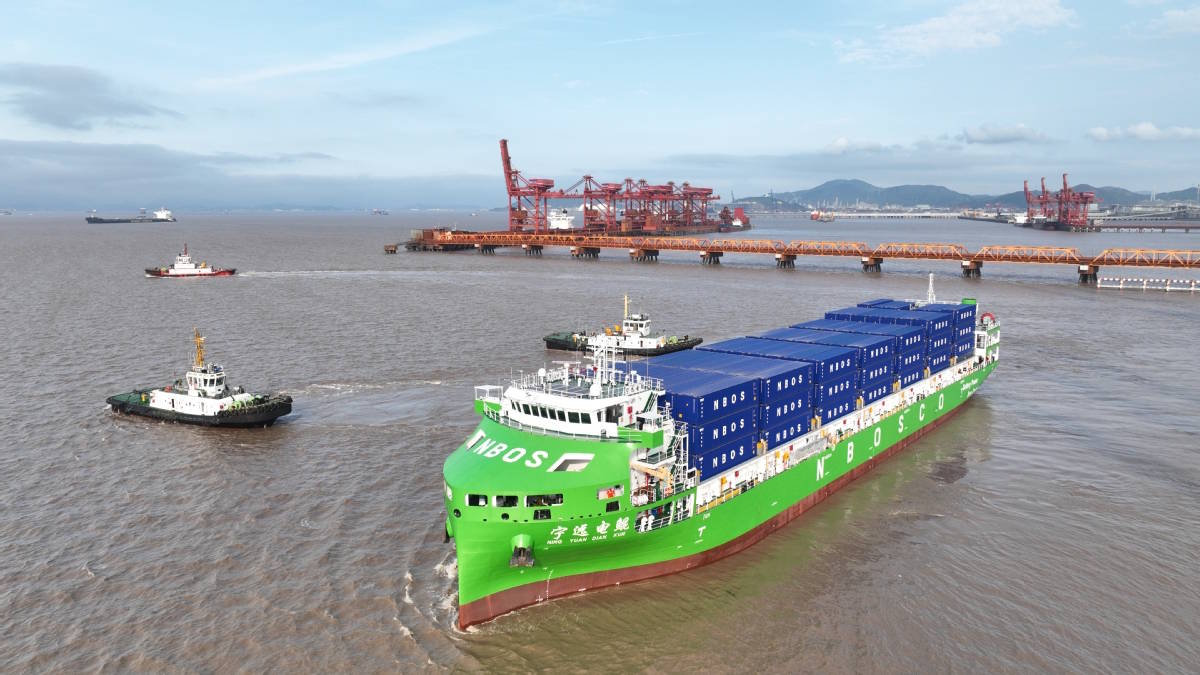
Yet the real story lies beyond ferries: China has begun electrifying cargo ships—traditionally considered far more difficult to electrify due to their larger energy demand and more complex operational requirements—primarily for use along inland waterways.
Electrifying China’s inland shipping industry at scale will require overcoming multiple barriers, including financial and operational constraints to the adoption of electric cargo ships. But well-designed, coordinated policy can chart the course forward.
Setting sail
Electric cargo ships are entering real-world operation at a rapidly growing pace (Figure 1). In 2022, there were only four electric cargo ships in China; by 2025, this figure had increased by 950%, to 42.
Ship types have diversified, from bulk carriers and container ships to multi-purpose cargo ships. At the same time, vessel sizes have grown significantly, with the maximum deadweight tonnage (DWT) rising from around 3,000 tonnes in 2022 to approximately 14,000 tonnes in 2025.
This indicates that China is testing the feasibility of electrification for increasingly larger ships. Although battery capacity constraints continue to limit sailing range per charge—which typically hovered between 150 km and 400 km from 2022 to 2025—trends show steady improvement; by 2025, electric cargo ships with a range of up to 500 km were already in operation in China.
Figure 1. Number, size, and range of electric cargo ships in China from 2022 to 2025

Note: Data for this figure were collected from public reporting, and detailed parameters were not available for every ship. Some ships are not shown in the size and electric range charts due to data gaps.
Inland waterways have become the primary testing ground for electric cargo ship deployment. By the end of 2025, 86% of electric cargo ships in China were operating on internal rivers.
Nine provinces and municipalities have already launched pilot projects, covering major waterways such as the Yangtze River, the Pearl River, and the Beijing-Hangzhou Grand Canal (Figure 2).
Among them, at least four provinces (Shandong, Jiangsu, Sichuan, and Hubei) are now scaling up their electric cargo ship programs after demonstrating real-world technical and economic feasibility.
One prominent example is the Huahang Xinneng No.1, launched in Hubei Province in 2023. This vessel, which uses battery-swapping technology, reportedly saves ¥1.8 million (~$250,000) annually in operating costs.
Owing to its strong environmental and economic performance, four additional vessels in the Huahang Xinneng series are scheduled to enter operation in 2026.
Figure 2. Geographical distribution of electric cargo ships in China (based on ownership) as of 2025

This transition matters because inland shipping represents a significant—and often overlooked—source of carbon and air pollutant emissions in China. Inland shipping was estimated to emit 14.9 million tonnes CO2 in 2020, with emissions projected to more than double by 2060 without effective intervention.
Beyond climate impacts, inland shipping is also a major contributor to ambient fine particulate matter (PM2.5) pollution in river basin provinces.
For example, in Shanghai, a critical inland and coastal shipping hub, shipping emissions contributed an estimated 5.2 μg/m3 to the annual average PM2.5 concentration in 2018, with peaks of up to 9.3 μg/m3 during onshore wind hours.
For context, the same year, the annual average PM2.5 concentration in Shanghai was 36 μg/m3. More than 65% of these shipping-related pollutant emissions are estimated to originate from inland shipping.
Similarly, inland shipping emissions were estimated to contribute between 3.5% and 16.6% of PM2.5 concentrationsin cities along the middle reaches of the Yangtze River in 2018, including Yichang, Yueyang, Wuhan, and Jiujiang.
Headwinds ahead
Despite progress in electric cargo ship adoption, the large-scale electrification of inland shipping in China faces several barriers.
From a financing standpoint, electric cargo ships require high upfront investment due to their large battery capacity demands and enhanced battery safety requirements, creating considerable financial pressure and risk exposure for shipowners.
Although these ships can save on operating costs, the payback period is often long, which can be especially challenging for small shipping companies or individual ship owners.
Charging limitations are another obstacle. Charging and battery-swapping infrastructure remains insufficient along inland waterways and fragmented across regions. This partly reflects limited and unstable freight demand, which leads to low utilization of charging and battery-swapping stations, undermining the economic feasibility of this infrastructure.
These factors can prevent electric cargo ships from fully capturing the cost advantage of electricity over diesel, weakening their total cost of ownership competitiveness.
In addition, the absence of effective cross-provincial coordination limits the ability to aggregate freight flows and coordinate electric vessel and charging infrastructure deployment across regions. This is also a challenge for operators on cross-provincial routes seeking charging stations to maintain long-distance services.
Policy tailwinds
The upcoming 15th Five-Year Plan period (2026–2030) provides a critical window for China to accelerate the large-scale deployment of electric inland shipping through effective policy design.
Momentum is building: national policy discussions around “new energy vessels,” “zero-carbon shipping corridors,” and “zero-carbon ports” are gaining increasing traction, while provinces and cities along major inland waterways—particularly in the Yangtze River Delta and the middle reaches of the Yangtze River city cluster—have become priorities for air quality improvement efforts.
Just as stronger environmental policies have helped drive the rapid electrification of heavy-duty trucks in China, they could also help accelerate the transition to electric inland shipping.
Developing an enhanced subsidy that favors electric vessels, on top of the current vessel trade-in subsidy program, could help reduce the upfront investment burden for electric vessel adoption.
Meanwhile, tightening ship engine emission standards toward world-leading levels could increase the compliance costs of conventional-fuel vessels and improve the relative competitiveness of electric ships.
In addition, coordinated efforts across provinces to develop zero-carbon shipping corridors along major inland waterways, supplemented by local incentives such as lock-passage fee reductions and electricity subsidies for charging, could help aggregate freight demand and inform the deployment of electric vessels and charging infrastructure, improving the economics of electric ships and charging stations.
Finally, developing a plan for the siting of charging infrastructure along major rivers, together with subsidies for the construction and operation of charging infrastructure, could support the availability of charging infrastructure and operational viability of electric ships on inland routes.
The electrification of inland shipping in China is already underway; what is needed now is smart policy to accelerate the transition. Perhaps 5 years from now, the opening line of another blog post may read: “China’s success story in electric ships is no longer news.”
Zhihang Meng is a Researcher and Hongyang Cui is China Regional Lead at the International Council on Clean Transportation. Reproduced with permission.