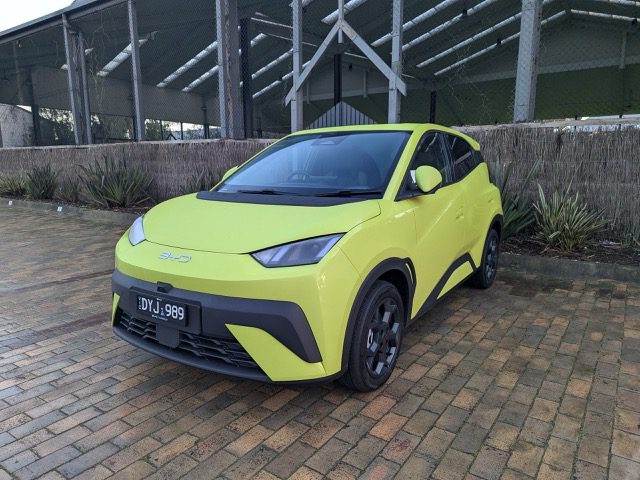
Last year in China, I drove the BYD Seagull, which by the end of the year ended up at our local shores in Australia as the Atto 1, and so far has seen a surge in sales, selling over 2,400 units in its first 6 months.
Part of this is thanks to the media coverage it has been getting as a result of being the cheapest electric car on the market, but also a few other key details that is helping the model see a sharp rise in its sales. In many aspects, it beats comparable petrol cars.
The premium model which I drove in Melbourne and on the windy roads around the Mornington Peninsula starts at less than $27,990 before on-roads, while the base Essential starts at under $24,000 before on-roads, the lowest cost new EV on Australia’s roads.
For the extra $4,000 in the Premium model that we drove, you get a bigger battery with more range, a bigger, more powerful motor, alloy wheels, a 360-degree camera, heated seats and a few other goodies. It’s worth the upgrade if you are looking at keeping this car for quite a long time, especially the heated seats in colder states.
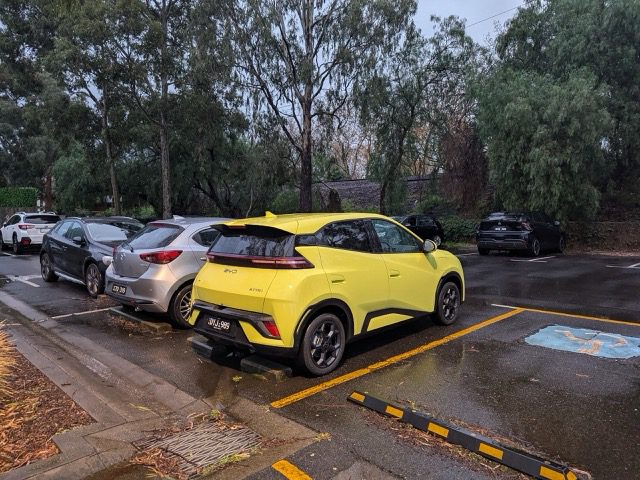
The Atto 1 is just shy of 4 metres in length, making it relatively compact but still a bit bigger than the 3.6 metres long Kia Picanto ICE city car, which by way of comparison starts at around $21,000 before-on roads for the Sport Automatic variant.
The Atto 1 has 150 mm ground clearance, which makes it easy to climb in to, and there is quite a bit of space inside, and even in the rear, with the seat set to my driving position, there was enough space for most city and suburban trips.
Despite the price, there is nothing cheap about the materials used inside. To me, it felt a lot closer to the locally available BYD Dolphin in terms of the seat and cabin materials, which is quite amazing given its entry-level pricing.
The Atto 1’s interior is pretty similar to the Atto 3 and Dolphin, which makes you wonder where the cost reductions in this model might be. I couldn’t really see many areas where there had been cost-cutting from the build quality point of view during my week with the car.
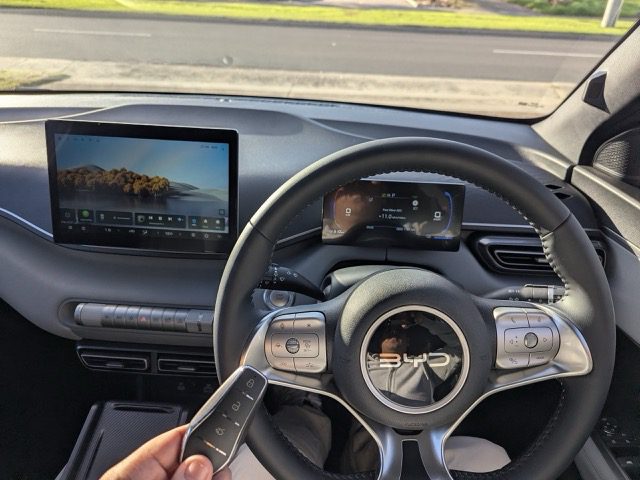
From a tech point of view, you do find a smaller 10.1-inch infotainment screen that offers navigation and other entertainment functions, including Apple CarPlay and Android Auto.
I couldn’t really take any points off for this, given its ICE competitors in Australia don’t offer anywhere as much – Kia Picanto, for one, has an 8-inch screen
On the road, everything we know about micro cars comes to life but given it’s an EV, it packs a lot more.
Firstly, it’s the cabin noise, which is well insulated for driving around suburbs and city streets, but you can hear a bit of wind noise at freeway speeds over 90 km/h.
Looking at the power, thanks to its front-mounted single-motor drivetrain, which delivers up to 115 kW of power, it was zippy around the streets of Melbourne.
Having an official 0-100 km/h time of just 9.1 seconds, getting off the line with that electric torque is easy, and to be honest, you don’t need much more than that.
For comparison, the Kia Picanto does the same sprint to 100 km/h in around 14 seconds.
On highways, it feels quite stable, and I was also impressed with the lane-keep-assist and radar cruise control, which is not a feature that generally works well in affordable models on our market.
One area that this car could be improved is the driver attention monitoring system, which is quite sensitive. Even changing radio stations triggered it. We hope the sensitivity can be adjusted via a future update.
On the battery front, the BYD Seagull comes with two battery sizes, 30 kWh and 43.2 kWh. Both feature BYD’s lithium-iron-phosphate (LFP) battery chemistry.
The larger battery can deliver up to 310 km of WLTP range, which is more likely to be around 280 km in my testing.
This larger pack is the one I got behind the wheel of in the Premium variant, which has plenty of range and even comes with reasonably fast charging speeds.
While DC charging, it can also be charged from 20-80% in around 30 minutes, which is quite good, once again given its price point.
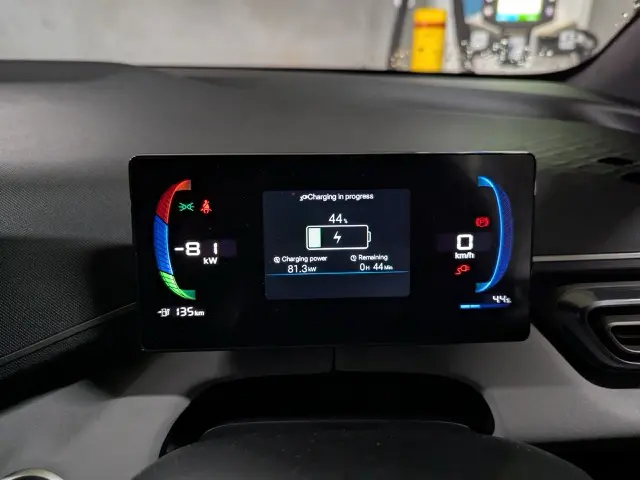
In our testing, we got speeds of up to 81 kW even with a state of charge of 44%, and of course, the majority of the charging was done using three-phase AC charging at up to 11 kW.
Every time I visit China, I see plenty of BYD Seagulls on the road. Now that this model is finally capturing driver attention in Australia as the Atto 1, it is becoming an important model in our EV market.
It performed even better than I expected, and given its five-star ANCAP rating, you are not really sacrificing much. It’s a low-cost car, but it’s not a “cheap” car. I would call it a value-packed EV and the best sales months for the Atto 1 could still be ahead.
BYD Atto 1 Australian Specs

See The Driven’s detailed EV sales data here: Australian electric vehicle sales by month in 2026; by model and by brand.
Please sign up for The Driven’s free daily newsletter and get the latest EV news and analysis delivered straight to your inbox.