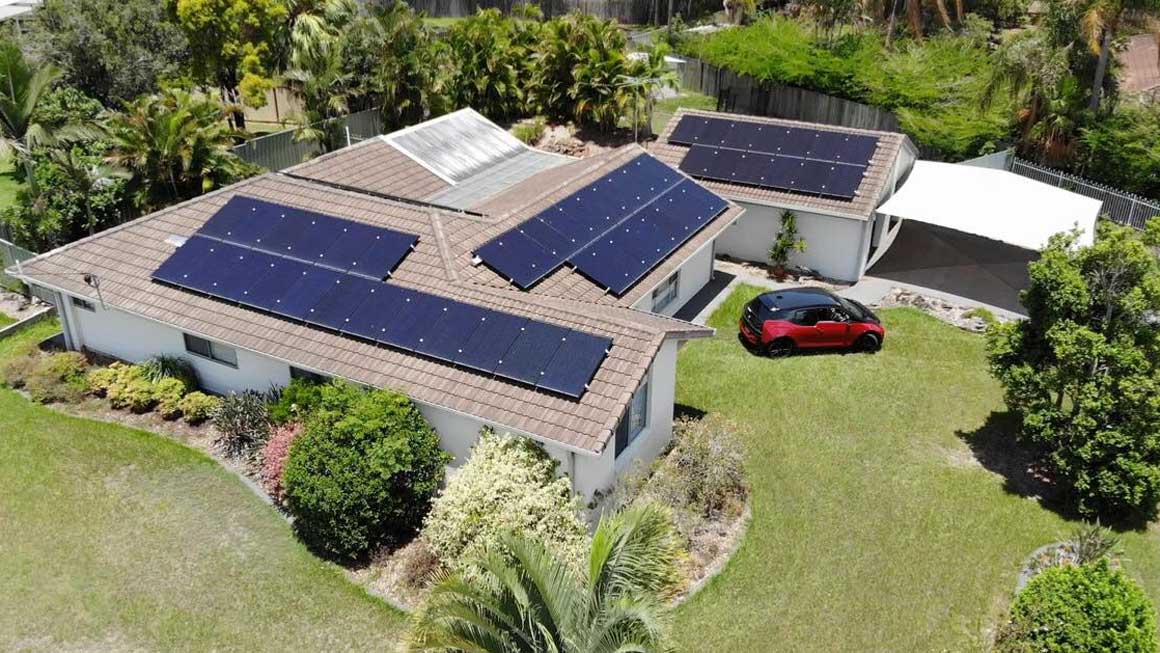
The overwhelming majority of electric vehicle owners in the Sydney and Hunter Valley regions have rooftop solar, with nearly one third of them adding the technology to their homes specifically to help charge their newly acquired EVs.
A customer survey led by Ausgrid last year also reveals that one quarter of EV owners have a household battery – and more than two thirds of those who do not yet have rooftop solar are considering installing solar, and possible a battery too.
The survey found that 60 per cent of EV households had rooftop solar, with average installed capacity of 6.9kW, and one quarter had battery storage too, with an average size of 15.5kWh. Some 30 per cent of solar power system owners and 22 per cent of home battery owners indicated they installed the technology specifically to charge their EV.
Unsurprisingly, given those statistics, the overwhelming majority of EV owners (78 per cent) live in free-standing homes, and most – 83% – are couples, with around half having children. Most have household income of more than $100,000.
More than half – 56% – of the EV owners travel between 10,000-20,000 kms annually, but a further 20 per cent travelled more than 20,000kms a year.
Some other observations:
Nearly two thirds – or 62% – of respondents installed their own dedicated home EV charging equipment, but one third simply plugged an adaptor cable into the electricity socket. Most (77 per cent) of the dedicated charging equipment came from Tesla.
Nearly all – 83% – charge at home almost always (67%) or relatively often (16%).
Just over half – 51 per cent – charge whenever it is convenient, or every couple of days, and only 10% of drivers wait until the battery is almost flat before charging.
Ausgrid suggests this indicates a potential shift to a “top-up” mentality for charging electric vehicles. This may be due to the convenience of home charging or potentially an EV range consideration (further research would be required).
Some 56 per cent use timer setting to control the time of when they charge their electric vehicle, a large majority of EV drivers (78%) felt comfortable with utilities controlling the charging of their EV on peak days for an incentive, and around 51% indicated that up to $10 per event made it worth their while to participate in a peak demand program.